Main menu:

Site search

Categories

September 2026
M T W T F S S
 123456
78910111213
14151617181920
21222324252627
282930  

Tags

Blogroll

Being careful

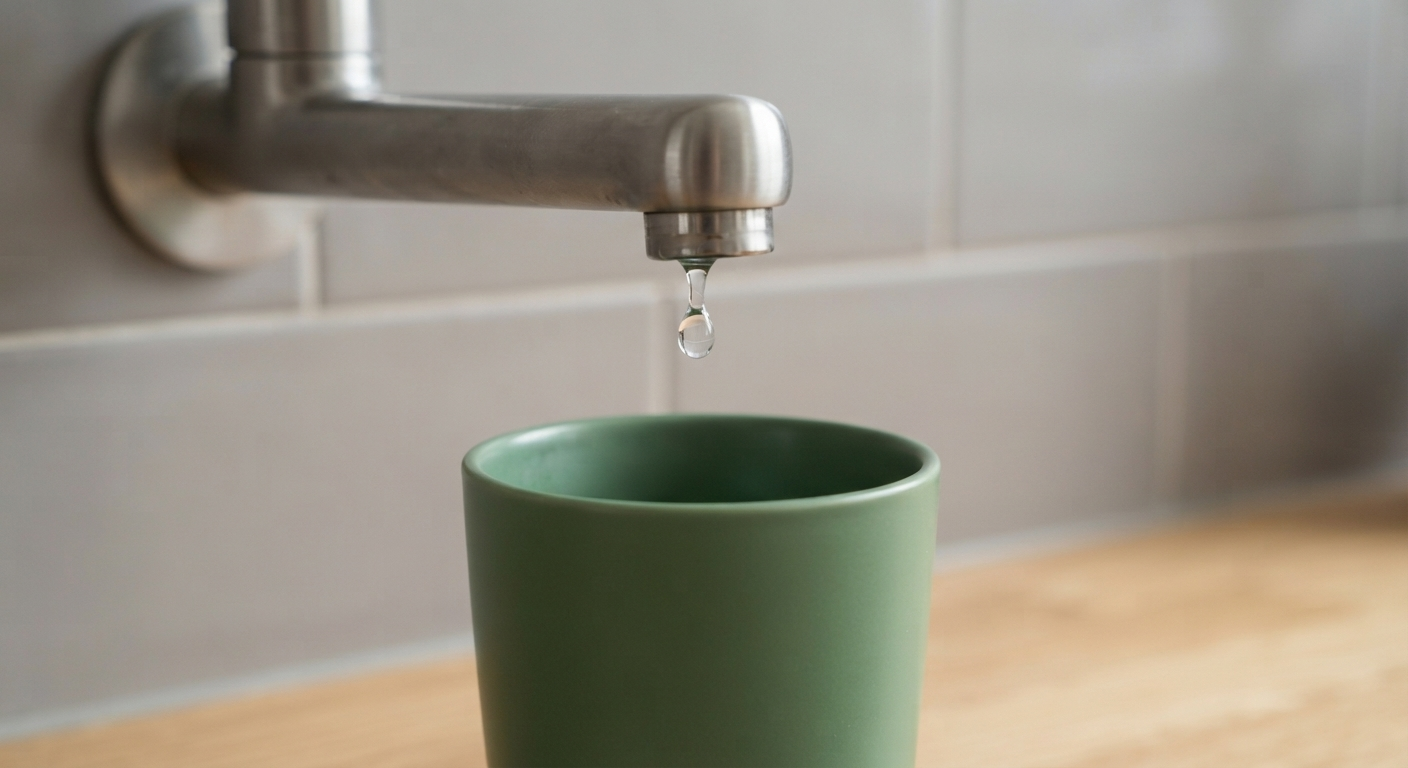
A drop of water hanging on a tap about to be caught by a mug,

When the hosepipe ban was brought in on the 11th July, it was a bit of a shock. Anglian Water were the old incumbent in the UK, and despite very low rain fall, we get few hosepipe bans. The last one was between the 5th April and 14th June 2012! The current Temporary Usage Ban (aka hosepipe ban) is still in place.

No matter, we looked at what we were doing and, like everyone else, looked at how we could help ensure this vital commodity could be used to its full and precious stores could be available for as long as possible.

The average daily water usage in the UK is 140-150 litres per person per day (145 l pppd). We aimed for 100 l pppd, as this is the Government’s DEFRA (Department for environment, food and rural affairs) is aiming for by 2050 to ensure everyone in the UK has access to the water they need.

Could we achieve that in 2026?

I was a little doubtful. And in July, we got our usage down to 110 l pppd. To work that out, I took our Smart Water meter reading for July (6,976 l) and divided by 2 and then by the number of days in July, 31.

=> Water usage pppd = water usage ÷ (number of people * number of days in the month),

=> 6,976 ÷ (2*31) =112.516 l pppd.

So, let’s do that for June, July, August, September (so far).

MonthUsage (l)Number of daysNumber of peoplePer Person Per Day (l)
June5,140232111
July6,976312112
August6,345312102
September2,41410380

Wait a moment, we had 30 days in June!

We had 7 days out of the house, a small holiday. If we did not change the number of days we were using water, it would look like such an outlier, as the usage would be 5,140÷60=86 l! The zero days were not counted. Of course, if you don’t have zero usage you have a major leak somewhere and that needs fixing asap.

The question is, what have we done to reduce our numbers?

Cooking and kitchen.

Ironically, we’re not washing up by hand. I have always doubted the argument that the dishwasher does better, but the numbers for us do hold up. You really do need to make the effort to clean up your cooking area religiously as you are not washing up after every meal. Saving a small amount of clean washing-up water in a jam jar gives you that capability without much effort.

Leaving the lid on your pans not only saves electricity or gas. Most soups can be made with a fraction of the water just by using the lid and stopping the evaporation. My Carrot and coriander soup uses 75% of the water if you put the lid on the pan! It retains the thickness, we just don’t waste the water.

Of course, with a roast dinner doesn’t need boiled vegetables with it. Pop carrots (wrapped in foil are incredible BBQ’d or roasted), courgettes, broccoli, peppers, and baby tomatoes in with the roast potatoes to make an incredible roast dinner.

Washrooms.

Not flushing unless we need to, makes a huge difference. Sharing an ensuite, it was something we were in the habit of doing in the morning and evening. But doing this throughout the day saves a huge amount.

Showers have the water turned off during soaping. One a day. I don’t rinse my body before rinsing my hair too. I am only washing my hair every 3 days. We each have a bath a week. That day, you do not have a shower. That brings our showers down to around 30 l a shower.

We do not harvest run off from our shower, but if the water crisis in the UK got worse, this is grey water that can be used to flush toilets for when it’s brown… Same can be done with bath water, of course.

I use the same start-stop pattern when hand washing and teeth brushing.

Eating and drinking.

Drinking water during the hot weather instead of tea. Weird but true, boiling water means some is lost to evaporation. Of course, during the heat waves, moving to water gave us better hydration too. Shifting our 2 l of drinking water to mostly drinking water makes it count more.

Cleaning.

We clean our hard floors with a steamer, which is used for the bathroom and shower room fittings. A litre of water cleans 52m2 of flooring, 3 sinks, 1 bath, and 1 shower. Try doing that with Cif, which needs rinsing down.

Watering house plants.

Left over water is used for the house plants. Grey water that hasn’t had detergent in it is ideal. Left over tea can give a bit of pep. Drained water from vegetables you aren’t using for stock or gravy is like using compost. Do remember to cool the water first!

OK, seems a bit involved…

These are habits we’ve built into our days. We cook the majority of our food at home, yet our water usage stays reasonably good. As we’re now three adults (four some weekends), we use more water for the household.

But sharing cooking and cleaning techniques, we have managed to reduce our usage per person per day. Actually, that’s the measure you need to know if you are making the right moves.

What are you doing? Any techniques or approaches were missing? Please share in the comments below.

Water, water everywhere but not a drop to drink!

My 6th podcast was all about resource management over the baking hot summers. While the heat waves were happening in the East of England, our local news channel asked residents what they’d like to see happening. More than a few people asked this question: we’re on an island, surrounded by sea, can’t we just use that?

Desalination.

The title sums it up, high salinity (saltiness) is not useful for many creatures, particularly not land mammals like the naked apes we are.

Desalination is the process for taking salt out of water, but potable (drinking) water has a bit more done to it besides. Our land harvested water is cleaned: soil particles, animal waste (including ours), and harmful chemicals are all removed down to a microscopic level.

While the sea might look lovely and blue, it’s a thriving eco-system with many of these features in it, not least sodium chloride which is harmful in great quantities.

The deep sea reality.

Harvesting sea water close to land multiplies some of these materials, including basic silt. Even further out, the number of living organisms (plant, animal, and other) is high in number. This means biological filters need to be used. Yet the flotsam is carefully looked after so as not to disturb the natural balance: a disaster for the natural world and highly damaging for land health too!

Such pipe work is complex and tough. Deep sea pipes need to withstand the harsh saliferous environment with exposed weather events and tides and currents all pressuring the system. 24/7, 365 days a year, these systems, vital for human life, need to be robust in one of the most extreme environments on the planet.

This is a non-trivial task, that needs to be maintained. For an installation and maintenance point of view, it is not a quick and easy fix.

Polishing the diamond.

Having achieved harvesting the water and coarsely filtering it, this is repeated to a finer and finer grain. We can’t filter out the salt, but much of the other detritus is done mechanically first.

The process of removing the salt is done through ‘exchangers’ like isobaric ones. Isobaric exchangers work by capturing the pressure hydraulic energy from a high-pressure brine reject stream. The water leaves the membranes, transferring it directly to the incoming seawater feed. By using a rotating ceramic rotor or piston chambers to act as a fluid interface, the high-pressure waste stream pushes against the fresh intake water. Systems like these recycle up to 98% of that pressure without needing to convert it back into electrical energy first, drastically reducing the load on the main high-pressure pumps. Often the salt is saved as a by-product and sold as seasoning.

This takes energy. For a highly efficient plant, it costs between 2.5 and 3.5 Wh per litre to do this stage. The total processing of land harvested water is 0.2 to 0.5 Wh per litre.

Ironically, this water is relatively pure, apart from some microbes. Pure H2O is not actually good to drink, or push through the UK water system. Some necessary minerals are put back, by passing the water through beds of crushed limestone. This gives the purified water calcium and magnesium carbonate to balance the pH and give it a crisp, natural taste. And protect the UK distribution systems.

We then need to kill any bugs remaining, to make it potable, as we do with land harvested water.

So tricky, but not out of reach. Surely better than rationing water with hose pipe bans?

In 2010, Thames Water opened their Thames Gateway Water Treatment Works (TGWT) in Beckton, East London. It uses brackish water, which has salt in it but at a lower level than sea water. Sea water has 35 parts salt per thousand.

As it is expensive to run and has faced operational hurdles, TGWT has largely sat idle. TGWT only comes into operation when water supplies are short and the conditions are favourable. To give it context, TGWT produces 100 to 150 million litres of water a day. That’s pulling out 1,100 tonnes of salt a day.

At 2.5 Wh a litre, TGWT uses 250,000 kWh or 250 MWh as day. A more usual site produces the same amount of water for 20 MWh. If TGWT ran every day, it would use 0.03% of the electricity generated across the UK.

If every coastal county across the UK had a desalination plant, we could have 5,500 Ml a day for a sum of 5.02 TWh per year. Or 2% of the current draw on the electrical generation in the UK.

While the recent droughts have brought this idea back to the fore, it is not a quick and easy sticking plaster. It certainly can’t reduce the price of water or reduce the need to be careful what we use.


If you want to know more about how this technology is used throughout the world, please check out Wikipedia’s Desalination by country page. There’s an interesting technology called Seawater Greenhouses, which desalinates water purely for crops. It requires less processing as the water doesn’t need to be potable – think of your water butt collecting rainwater for your garden use…

Two can live as cheaply as one.

We’ve been looking at insulation, and during the winter, one of the biggest influences on how much energy you need to heat your house is how many mammals are living in it.

A human being raises the temperature in a room by around 1°C, so having two people… It’s why we run many living spaces at a lower temperature: a dinning room run at 20°C (without a thermostat) is way too hot if you have six people round the table. It may be why both gas and electricity usage is much lower than you’d expect for Christmas Day (as seen in the analysis The power of Christmas ).

There are other benefits, as mostly you cook food together. Food takes heat to get warm – the more food there is, the more energy it needs to get hot. But in an oven, that is largely hidden from view. The microwave makes it much more obvious.

Why are you talking about this?

After two years, our son is moving back in with us. Which is going to change our power and water usage dramatically.

There are some definite benefits – less heat required for the communal areas, but that sits alongside downsides. Water usage is a clear one. It’s hard enough letting it mellow when there are two people in the house!

We’re geared up to charging things during the day, when the solar panels are generating meaningful electricity. We also keep sockets off when the chargers are not required. When I first got our ‘smart plugs’ and bulbs, a good friend of ours thought we’d burn more on running the wifi sockets than we’d save killing the power to the TV, for example. Actually, the 17 plugs and 19 bulbs (36 devices in total) use very little energy, our minimal draw is less than 100W an hour. Our TV alone would use 25W on standby, and as we only watch the TV for four hours a day, it costs in to do that.

At the beginning of my work day, a switch ensures the bedroom lights are turned off, my monitor is powered up and, during the winter, the desk lamp is on until the sun rises. My office uses around 100W of power an hour, so 100Wh of energy. I have a solar powered keyboard which I charge up while I have lunch, further saving power.

I see you use it other ways too…

I can get quite deep into my work. In the end, having the desk lamp turn off but leaving my monitor on at the “end of the day” subtly tells me to wrap things up without leaving me without the ability to save the work and shutdown the computer properly.

I then turn off the monitor and put on the desk lamp for two minutes, allowing me to close the door on my office without the need to go back and fetch my water bottle and mug.

A change of pace.

Of course, Tuesday was power on day for the heat pump’s heating circuit. Using thermostats means we only make use of it when needed, yet that single step should ensure the house doesn’t get cold. The insulation and triple glazing should keep that investment in energy as low as can be. I can’t believe it’s nearly been a year since we installed the new glazing.

The chores and cooking should be shared. Which should make things a bit easier. Of course, the company is more than welcome. There’s more money coming into the household too. Having got our water usage down to 97l per person per day, I wonder if that will stay the same?

A Coat for the House, part 2.

Last week, A Coat for the House, Part 1 looked at what was going on internally in your property. This week, we’re heading outdoors.

External doors, windows, and walls.

Entrances and exits.

Entering with the front door, we can then go to the other entrances/exits, the windows and end up with the walls.

Poor quality front doors can leach heat. As a result, all types of door quote their U-Values, If you are in the market, it is worth shopping around for a product that works for you. A front door typically has a thermal rentiton of 1.0 – 1.4 W/m2K, though a top of the range one can get as low as 0.7-0.8 W/m2K and typically has Passivhaus certification.

Door curtain can be used to boost the rating of a typical door: keeping the curtain colour the same as your hallway palette can give a high end feel, as well as keeping the heat in.

Of course, any external door can be treated the same way to similar effects.

Windows

Windows are the next factor. If you have single glazing, the U-Value is around 5 W/m2K.

Any double glazing fitted between 1970 and 1990 typically has a U-Value of 3.0-3.5 W/m2K, and ones from 1990 to 2000 has a rating of 2.7-3.0 W/m2K. Today those values have improved to 1.2-1.4 W/m2K. So it is worth looking at whether your units could be replaced.

UPC glazing does fail over time typically within 20 years. Any window fitted in 2000 will need to be replacing before 2030, so if you can, make a budget to make that happen. Anything older has probably already failed.

Different technologies have helped make that difference, including films to reflect light and heat back into rooms for example. Triple glazing is not a huge jump, coming in at 0.6-0.9 W/m2K or a Passivhaus certified one achieving 0.5 W/m2K.

Walls, the final frontier.

Whatever your style or age of house, solid walls make up the majority of the fabric of your house. It is the hardest to treat once the building has been constructed.

Cavity walls.

In the 1920s, the UK started to introduce cavity walls. This was a modern technique whose aim was to keep our moisture from British domiciles, a protective layer against our wet weather. It wasn’t until the 1970s that insulation was added to such walls and by 1990, cavity wall insulation became a compulsory part of the building standards, first with polystyrene (often balls), then with rock wall, celotex, and finally foam.

How do I know if I have cavities and why bother insulating? More heat goes out to the roof!

If your house was built post 1930s, it is worth checking if it has cavity wall and if that space is insulated. If it has and doesn’t, get it done as soon as you can: that insulation can reduce your heat loss by 80%. The U-value for an uninsulated cavity wall 1.5-1.6 W/m2K. A wall with a U-Value of 1.5 W/m2K wall loses 30 W of thermal power per metre. Over a day, that is 24 * 30 Wh, or 720 Wh. If the wall is 6m2, that is 4.32 kWh – if you have a gas boiler, that would need to burn 5.4 kWh in gas to replace that heat and keep your room at a constant temperature. Using that number against the size of your house can help you work out your payback.

This is why wall insulation is so critical. You don’t need an air pump to get a good EPC certificate or reduce your carbon footprint or save you money. Effective wall insulation can do all that for you. Grants exist if you are a low earner or get other benefits. There are schemes for older home owners and tenants too.

Likely costs are subject to your location in the UK, accessibility and the size of your property. Convert your wall area into kWh of gas and multiply by the cost of the gas to get the ‘payback’.

House typeMinimum costMaximum cost
Minimum costMaximum cost
Mid-terrace£600£1,200
End-terrace/bungalow£700£1,500
Semi-detached£1,000£2,500
Detached multi-storey£1,500£3,000

I get it, but my house, like great teeth, has no cavities!

Cavity wall insulation is not an option for you. What ever you do, it is likely to cost more and will need an experienced firm to help you do achieve insulated walls.

Often it involves internal or external application of foam or rock wool, with moisture protection and air blocks applied. If you are in a terrace or semi, see if your neighbours would like to team up, especially for external walls.

You may need planning permission. But this is worth doing and newer materials mean that applying internal insulation does not need to take as much space to get great results.

Or consider approaches used elsewhere in the world. Carpets were used in the Middle East to keep warmth in and provide decoration. Can allow wall materials to breathe and keep moisture free, and prevents condensation.

Bringing it all together.

Our coat for the house has many layers, but hopefully there is something here that helps you.

Remember, every bit of gas or electricity you don’t need to keep warm, reduces your bills and your carbon footprint.

This is the last part of investigating the options for insulating your home before the UK winter closes in. I hope you’ve enjoyed it.

A Coat for the House, part 1.

Entrances and internal walls.

We’ve looked at roof insulation being a warm winter hat for your home. Insulating your floors has given you a pair of cozy slippers to isolate your feet from cold floors. We can think of doing the same for your walls as giving you a heavy-duty winter coat.

Before I dive in, I want to go through our house as a case study. On paper, building started when building standards were still pretty lax compared to the latest edition. Yet, as a self-build, it was a different beast to our 2000 CE built house.

For a start, the external walls are 30cm in depth – a brick layer, the breeze block layer, the cavity wall filled with rock wool insulation, the plaster lined with foil to protect against infrared losses and gains. Upstairs, the dormers are lined with thick celotex and the lower plaster backed by the same material. Chalet bungalows should be notoriously bad at keeping warm, but our house isn’t.

Our 141m2 “proper” house built in 2000 cost around 18,000 kWh in gas to keep warm with a programmable thermostat. Our 244m2 chalet bungalow finished in 2012 cost 17,950 kWh in gas to do the same with the same level of controls. Once we tightened up how the heating controls worked, we got that down to 12,950 kWh.

Why did it cost, comparatively, so much less to keep the bigger house warm? Wall insulation. That’s the biggest difference between the two properties.

Internal walls.

This could potentially be a DIY job. To start with, measure the depths of your walls. Ours are 18cm in depth, and like many houses, we have stud walls. In the past, studs were left largely empty. But lining between the studs with materials like celotex (a DIY task), or foam filled insulation (needs to be fitted by a specialist).

Even just applying rock wool (a DIY job) gives real benefit. I happen to know our house has celotex between the plaster, which gives a U-value of 0.21W/m2K.

The U-value measures the rate at which a material transfers heat. It is measure in W/m2K or Watts per (metre squared multiplied by Kelvin). In other words, the energy divided by the area multiplied by temperature. Remember, the lower a material’s u-value, the better. Very few things are close to zero.

But there are other areas to consider. Doors can be replaced with versions with much lower U-value version. Let’s look at an internal solid wooden door. Its U-value is around 2.5 W/m²K. We do have gaps at the bottom of our doors, but otherwise, they are doing a reasonable job. The house does need to breathe before we start sealing up such gaps.

I’ve heard foam spray foam insulation can cause issues with damp!

A reputable company will ensure that all work complies with best guidance, but ironically, air gaps and spaces are required to allow air to move and stop condensation against plaster and internal pipes and wiring. Some buildings may not be suitable for being tightly insulated with foam insulation as a result. The right materials for the right building is essential.

If you can’t swap an internal door for any reason, buying a thick velvet curtain or thermally lined one for the door can dramatically help improve heat retention. Door curtains can be engineered to open automatically when doors open – eyelet curtains attached to the door itself are ideal ways of achieving this for little effort, or more traditional curtains teamed with dormer or door rods.

Such techniques were used in medieval castles, but the right fabric and mechanism for your room can bring this right up to date!

It’s curtains for you, my friend…

A properly dressed window finishes a room. But we don’t just use curtain for privacy. Good quality curtains can dramatically improve the thermal retention of a room when they are closed.

So it is always worth getting thermal blinds and/or curtains. Venetians are great for controlling light, but it is much harder to get ones that have a decent heat retention score.

If buying ready made curtains, thermal linings and pelmets over the top can really help keep in the heat. Team styles with your decor and rather than looking dated and pastiche, you can end up with a clean and modern feel. Light colours not only reflect infrared but visible parts of the light spectrum, helping keep rooms feeling light and airy during a dark winter.

Ready made curtains can be expensive. Teaming up layers can help improve performance and lower outlay: team cheaper thermal roller blinds with cheaper curtains to give the benefits without the cost. In our dormer rooms, I used single curtains from a pair, and a bent curtain rood to allow the curtains to be drawn back against the dormer wall – when drawn, they provide an external layer to the dormer cheeks, which can be difficult to do otherwise. A dormer rod is a more traditional way of achieving the same goal but costs dramatically more.

Coming up in part 2.

This is a big subject, and this part has focused on what could be achieved internally. Next week is all about the outside.

Help in the kitchen from a surprising source.

Learning how to make good use of our microwave to reduce our power consumption while cooking has highlighted just what we were missing out on in terms of the unit being an extra pair of hands in the kitchen, almost a sous chef.

It should be noted we bought the microwave in 2017, as our previous combination microwave had failed after 15 years. I have had three Panasonic Inverter microwaves and wanted one with a steam function. When it came to this replacement, I bought the NN-CS894S.

I had made use of stage cooking with the microwave and standing time with our previous models. You know those ready meals from the supermarket that have heat on high power for 3 minutes then stand for 2 minutes. But this was not exploiting it to the full! You can put a delay start and a delay end: when I do fish and vegetables. This is how I get to do this in a single pass: when the potatoes go on to start boiling, I set their timer for 12 minutes. I then delay stand the microwave to come on with the second stage of high and the time the fish is going to take, with a two minute stand to time the fish to be ready as I drain the vegetables and serve up the meal.

This version came with a manual with some pre-prescribed “recipes” that combined different functions, such as multimode and delays. This is not uncommon in more recent machines, but the beauty with ours is we get to do this ourselves, we just had to work out how to do this.

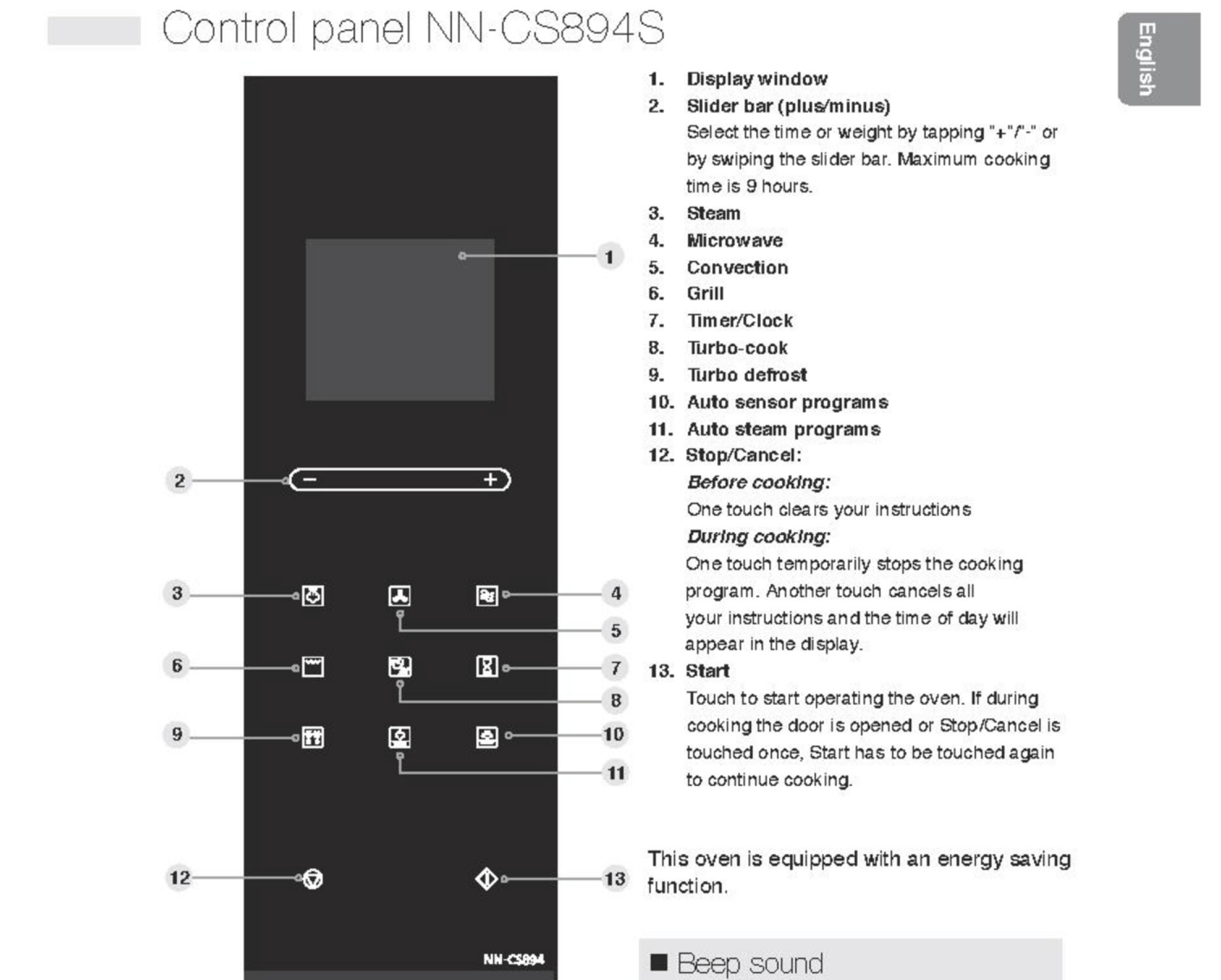
One of the things that is quite tricky, is that it has icons instead of labels for the controls. If you use the microwave daily, that works well, but we didn’t use the microwave frequently when we first got it and setting the clock is buried under a couple of menu choices, as are the self-cleaning functions!

Control panel from our microwave.
The control panel for our microwave.

I’m not convinced that you should need to have the operating manual to work out what is going on!

But it was worth persevering, and I did that by working through the recipes in the back of the manuals. Each microwave is an evolution and this latest one we use instead of an air fryer. It is convection oven has a big fan, so with the right basket, you have all that functionality and capability too.

Newer versions have included far more predefined recipes. The roasting method I use for our Sunday roast chicken is now such a recipe, all you need to do is pick the “Auto sensor” recipe for a Roast Chicken and enter the weight for your chicken.

Cooking a 600g lasagne is done in 8 minutes. Some of these recipes work without the need to preheat first. Like a lasagna recipe, fresh pasta is your friend if not pre-heating.

It all looks like a great deal of faff! And for what?

If you are working full time, raising small children, and can afford to do differently: such tooling may be optional, a nice to have.

But if one of those things is missing, money, a little free time, then the rewards cost in.

Running the microwave at the same time as the convection oven instead of just a convection oven costs in for doing a roast chicken. I did a 1.625 kg chicken today with roast vegetables for 43 minutes. That’s as quick as doing it spatch-cocked, for a fraction of the effort, and the vegetables were done at the same time. Doing the same chicken traditionally in a fan oven would have been 1 hour 36 minutes.

Plus that chicken was moist in the middle and brown, crispy skin. Just like a traditionally roasted chicken. We had it with roasted carrots, potatoes, broccoli, peppers, tomatoes, leeks, baby marrow, and baby corn. That’s 8 vegetables and a portion of meat served from out of the fridge and on to a plate in less than an hour for three adults and loads of left overs for the week.

Then there’s things like pies. We’ve moved to cooking from scratch, but if there’s one thing that kind of food is, it is quick. One pot to wash up, multistage cooking but otherwise, painless. 21 minutes of cooking, and 10 minutes of prep, if you peel the potatoes.

Soups are revolutionary. A stick blender and a litre pyrex jug, and the washing up is minimal. The stilton and celery soup I made last week was brilliant in colour, texture, flavour, and scent, in 18 minutes of getting the vegetables and herbs out of the cupboard and having soup to eat. Carrot and coriander soup in 13 minutes, and that has much less prep time. No faffing with a tetra-pak or bottle or can, just fresh vegetables.

All the washing up disappears in to the dishwasher too. Midweek cooking is nutritious and easy.

I make the most delicious flans, but what with standing the pastry then baking the entire flan is looking at 80 minutes of hard cooking. With the “turbo-cook”, a Quiche Lorraine can be baked in 7 minutes instead of 35-40! This brings our 5 minutes to make the pastry, 30 minutes to stand in the fridge and 35 minutes to cook down to 42 minutes. It does help if the proportions are right, that took more time to master. (Pre-packed pastry means it’s significantly less time, I just like doing everything from scratch).

Even if we’re not using the microwave function, the small oven heats in nothing flat. When there are fewer than four people in the house, it is our preferred method for cooking one thing in the oven. Yes, it will do a 2kg chicken comfortably, but there is not enough room for a few racks above or below it. Size does have its limitations.

We chose not to build it in. That gives us a service to warm plates on with wasted heat. I do this for the roast dinners and flans. When we get the kitchen done, I am really keen the microwave has that space to warm six plates.

A warm pair of slippers.

A cartoon image generated by Gemini of a pair of slippers on a rug next to a chair, in front of a log fire.

While roof insulation can easily be considered a hat for your house, treating the ceilings and floors is a harder concept to articulate…

Just get on with it!

Indeed! Insulating the roof does so much to prevent you losing heat outside is obviously a good idea. The floor and ceilings are a harder concept to see as being beneficial. Yet they account for 10-20% of losses on the ground floor. Yet ceilings lose around 25% of heat loss from a room. This is all about maintaining the temperature zones between rooms that preventing losses into the outside world. Slippers are internal shoes…

OK but upstairs, we benefit from the roof insulation!

Not really, because this is an extra layer in many new builds. The ceiling of the ground floor is essentially the floor upstairs. A floor may be easier to get to, than a ceiling. But if we don’t do the ground floor itself, we are missing an opportunity.

It may seem insane to discuss insulation during one of the hottest summers in the northern hemisphere. But while the news talks about insulation making it harder to lose heat (perfectly true), the journalists do not say that good insulation can keep your house cooler for longer. Insulation gives heat stability.

Let’s start with upstairs.

Whenever you take your carpet up for any reason, take the opportunity to look at what you have. Like the roof, care does need to be taken. If you have some rock wool between the ceiling downstairs and the floor upstairs, that’s likely to be done in more than one place.

If not and you can unscrew the floor boards, this is not a difficult job. You simply run rock wool between the joists as per https://www.youtube.com/watch?v=UCGpRpKKGV8. Now, it is much easier to do this when the house is built. But there are other opportunities: any room being refurbished can have it applied.

Having the floor up for plumbing or heating pipe moves, is such an opportunity. In bathrooms, always install a water proof membrane to protect your wooden or steel joists. Just remember: unlike the ground floor shown in the video, internal mid-floors live inside the warm envelope of your house, so they don’t need external ventilation blocks or air bricks to stay dry.

If that’s really not an option?

There are other things you can do if that kind of insulation is not applicable. Any floor, any where can have an insulating underlay installed. https://www.youtube.com/watch?v=nwdbRTrtjQY shows one approach and there are many products out there, all with pros and cons. Do look for materials with a foil or reflective face, as this helps with infrared shielding. The higher the R-value, the better the performance is likely to be.

Using carpets upstairs can be much warmer than using wooden floors. If putting in a new laminate or wooden floor, do ask your supplier about the thermal properties of the materials you’re using and what their recommendation is for the underlay. Will they fit it? Will they ensure floor boards are sorted out, if you can’t get to the boards before hand?

If you fit the underlay yourself, do follow the manufacturers guidelines for ensuring there are no thermal or condensation bridges formed. Tape is often recommended to ensure rolls or blocks of insulation are as close as they can be. Stapling the material to the floor may not be suitable for that very reason, as metal staples can introduce a thermally conductive hole.

Remember, just doing underlay is not perfect, but can have an R-value between 0.5 to 1.5 m2k/W and save 30% to 40% in terms of preventing loss between rooms or the floor compared to uninsulated floors. This simple change can reduce localised heat loss down to roughly 7.5% in an upstairs room.

OK, will that underlay approach work for the ground floor too?

Yes, and it will help, but there are bigger opportunities if you are doing renovations. Again reducing your loss to 7-14% instead of 10-20%.

Every little helps, even just an extra layer of insulating underlay, if there is no opportunity to do anything else. Wooden flooring and carpets tend to have a 20 year life, so the insulation needs to last that long too. It may seem like adding extra to the bill, but you will get it back.

A survival guide to living in arid times.

A drought has been declared here in the UK. At least officially.

What does that mean, when do such declarations get made and is there an end in sight?

There is no definition of what a drought is. A sustained period of no rain, seems vague. Yes, we have had several ‘heat dome’ situations in the UK over the past 12 weeks. Yet ‘hose pipe bans’ only came in late June, early July. Why is it only a drought now?

Even if it wasn’t a drought, is there more I can do to control my costs? I’m one in one of the 60% of homes in England fitted with a water meter, so every drop counts.

Lovely winter.

It was wet and grey, an archetypal British winter, at least here in East Anglia. It meant that our reservoirs were pretty full, with both April and May having their usual amounts of rain. From the end of May through to August, it has been hot. But winter and spring meant the hot weather was buffered by stored water.

We don’t tend to water the garden from mains water. I feel that potable water is for people not for plants. Yet the grass was still green in early July. I remember driving to my parent’s place when I graduated in 1997 and the fields, verges, and gardens being brown in early June. Because of all the rain over early this year, the fields turning brown happened much later this time.

What can I do to help?

Here’s some of the things we’re doing:

Cooking.

Any wasted cooking or drinking water can be used for plants. Cool down water from boiling vegetables to room temp to water plant. Not only saving the waste water, the trace elements from the vegetables help give plants a bit of a boost.

If you have modern pipework, fill glasses and pots right from the start of letting the water flow. If not, catch that water for plants and cleaning.

Cleaning.

Washing up typically uses more water than a dishwasher, but there are things you can do. Washing knives, cooking utensils, and cutlery first in shallow water. The water will be very soapy, so rinse off into the bowl or sink. That provides more water for the bigger items. Save up to do a day’s washing up in one go, rather than many smaller washes during the day. Save a jug of cleanish dish water to wipe down the surfaces from cooking.

Fill up machines. Or use half loads. Keeping yourself clean, and deodorised, keeps your clothes clean.

Windows and cars just need to be useable not spotless and shiny.

I use a steam cleaner. One litre of water cleans four sinks, one bath, 2 windows, 5 floors, and one shower.

Gardening.

If a plant is already dead, water is not going to help. Do try to hang in there, what looks dead may just be asleep for the rest of the year. Plants have survival strategies like us.

Do not water grass, it is incredibly resilient, and is likely to pop up green with the next major shower. Be patient. Do not walk on it unless you weigh less than 10kg (22lbs – 1 stone 8lbs).

Hygiene.

Do not flush if you just urinate. When South Africa had a long drought a few years ago, they had a motto. ‘If it’s yellow, let it mellow, if it’s brown, flush it down’. It sounds gross, but we’ve been doing this for a while and it does make a difference to our water consumption.

Showers over baths, goes without saying. But turning off the water while you soap and shampoo can save just a little bit more. Waiting for the water to get hot is time I use to wash my feet.

Don’t shower or bath if you’re going to the gym later. If you think about it, you’re getting clean just to get dirty… Your skin will thank you too.

We’re not at the stage where you put a bucket in the shower to use to flush the toilet for when it’s brown… But ‘grey water’ from baths can also be used for this purpose. Before you empty the bath, collect a couple of buckets. Half a bucket covers the yellow flush, three quarters, a brown flush.

Hands do not need the tap running while you soap. Levered taps allow you to turn off the mixer or single taps to lather and rub for the recommended 20 seconds, before rinsing. Same for brushing teeth, though of course that’s two minutes!

NB: South Africa brought in many measures as the country survived a two and half year drought. When a drought starts, it becomes difficult to predict when it will end.

There has to be a better way?

Harvesting water yourself to be able to use at such times is not a new idea. Some take this to the final stage and purify the water for drinking, but toilets can use grey water with little processing required for rain water collection. I know one family who used the grey water for washing their clothes too. All you have is a storage tank, often underground, with your drainage going in to it from your roof, then a grey water circuit feeding the toilets and utility area. The owner was passionate about sustainable living, so sunk a water storage tank into the back garden.

If you really have the space, you can process your sewage too. Often seen in rural, off-grid, Grand Designs (Channel 4 in the UK) homes, they can filter it through SUDS (sustainable drainage systems), which then feeds reed beds to ‘polish’ the water to near potable standards. I saw a great example of this during the Carbon Charter Summer Event 2026, held at Pilgrims Barn, in Haughley, Suffolk.

But with a 6,000 litre tank, seems out of reach of many. Actually, such tanks are only 5.5m2 in area, and about 1.2m deep, often buried underground, this is an easy task for many new builds. What is difficult is their reed bed and swimming pond, which were bigger than our back garden and many of the plots previous houses have sat on!

But doing this for several houses in a new housing development would be achievable, much like ground source heat systems.

I love living in East Anglia, but we have very little rain in a good rainy year. We’re classed as semi-arid. Many more homes are being planned in the area, and without real thought about how that works in terms of SUDS and water reclamation, it is not going to be possible. Were you aware that water and sewage companies do not get involved in planning decisions until very late in the process, in England?

Apart from saving water waste, you haven’t talked about how you are doing?

Our smart water meter was fitted in March, and we have used it to try and be careful with water. We clean ourselves, our house, our plates, and our food, cook with it, etc.
Two adults over July used 6,976 litres. That makes our usage per person 112.5 litres a day.

The average usage in the UK is 139 – 142 litres. To ensure we have enough water for everyone, the Environment Agency is aiming to get down to 110 litres per person per day. We’re approaching that target but still have a way to go. Our usage was 117 litres per person per day in May. It’s not as good as June, which was 85 litres per day but we did spend 6 days away from home on holiday.

What do you do to save water? Any tips or tricks that keep life comfortable while reducing your needs on the essential liquid for life?

Living off the grid

Yesterday was the first day this July we were using electricity supplied from the national grid.

In fact, since the middle of May this year, we have, where humanly possible, run ‘off-grid’.

Where humanly possible?

Some things are scuppering this philosophy. This sounds so ungrateful, but our electricity supply company gives us free hours of electricity and I am sorry, but I am going to try and use that.

We’ve also had three days where we just haven’t had enough of a chance to harvest and store enough from our solar cells.

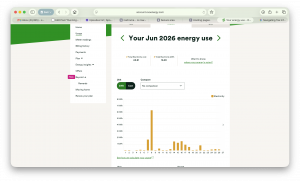
But in June, we only spent £3.81 on electricity consumption. Our electricity is £0.2375 per kWh (aka as a unit), plus VAT of 5%, so £0.249375. So we used 16.2kWh from the grid. We also pay a standing charge of £0.5138 +VAT (£0.53949) a day.

Surely you would be better off with a cheaper contract!

I love doing this analysis, because our £20.22 in June was mostly the standing charge. Full stop exclamation mark. We could go for a contract with a cheaper per unit price.

Every single one of those has a much higher standing charge. When we’re producing our own electricity, it makes no sense to do that.

In many ways, I am not against that. In the UK, our energy companies are privately owned, and they are trying to make money. We are not a cash cow for them, exactly the opposite. I also like the fact we have the grid to fall back on. It needs investment to keep it working and up to date.


So, I willing accept a charge of £0.249375 per unit, so that my monthly bill in the summer is as low as possible.

How low did you go?

Good question, and you know I love my figures. Let’s do a month by month walk through.

May 2006.

I realise that to reduce our bills, I need to ‘go off-grid’. This means the Tesla Gateway is operating in ‘island mode’, so it is not feeding power back into the grid or taking power from the grid.  

In fact, this seems by far the best way to ensure we do not use anything more from the grid than we have to.

I have set up various rules on the Tesla Gateway to fit in with our energy provider’s rules on the free electricity (zero rated), but the Powerwall logic is really basic. We are limited to 1 kWh for an hour, the Powerwall seeing it as a cheap way to charge the battery means we have to buy electricity.

Self-powered mode again doesn’t really help if it sees protecting the battery from running too low for an hour as not being worth the effort during our ‘peak time’.

Telling the battery to only charge off the solar also doesn’t work. Being in island mode does. And keeping an eye on it.  When the battery gets to 100%, the gateway stops consumption from the solar panels. It effectively turns them off, safety passive cooling which isn’t helpful. At those points, I need to reconnect to the grid.

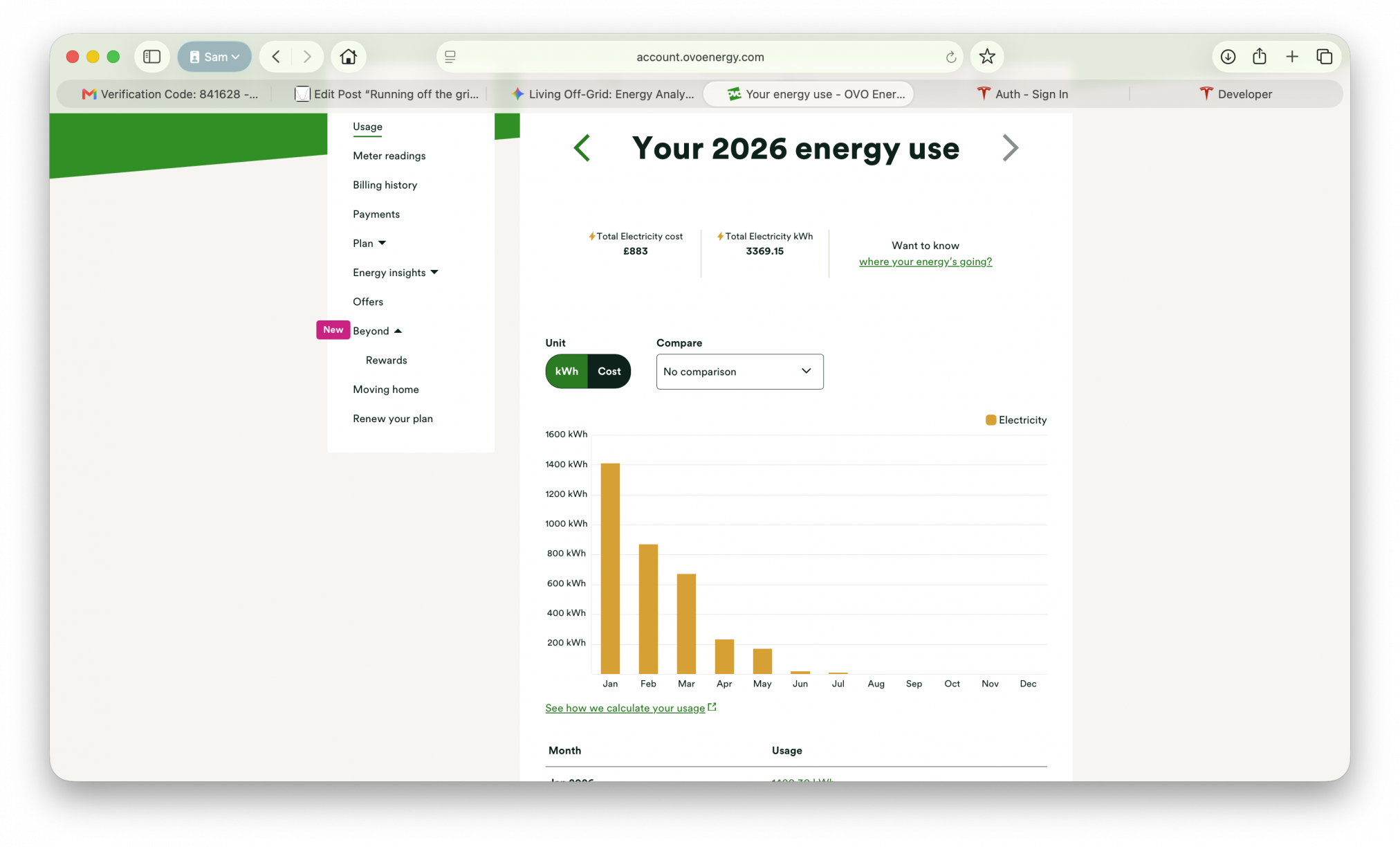
As I said, we didn’t start doing the off-grid thing until late-May. Basically, in terms of our Tesla Powerwall’s analysis and our electricity bill, you can see the difference it made.

A graph showing our energy usage in May in terms of whether it is sourced from the grid or the solar or the battery.
Our daily consumption in May from our supplier.

I learnt a great deal during this time on how the Tesla made decisions. None of them seemed geared towards us, and the fact we wanted to reduce our carbon footprint, and take advantage of cheap electricity albeit with some rules.

June 2026.

I’m still fairly nervous about all this: forget the business imperative, I use insulin. During a heat wave, the most valuable commodity I own is my fridge which protects my insulin and keeps it effective. Without insulin I die. I would die from starvation, but not as quickly or as painfully.

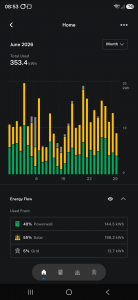
But this is the first month we pretty much manage it. We have not had a stellar month compared to last year. But generating 401.6 kWh absolutely covers everything we use, and some. 401.6 – 353.4 = 48.2 kWh. Although it doesn’t appear on this month’s bill, we even manage to donate some spare energy once I realise we have to manually do that. The SEG payment was £0.23.

A graph showing our energy usage in June in terms of whether it is sourced from the grid or the solar or the battery.
Our daily consumption in June from our supplier.

July 2026.

I am happy enough that, while there is a week to go, we have enough evidence to say the case is proven. This has worked for us. Again, compared to last year, we are not generating as much electricity from our solar cells. Their performance is still high, at 12 years old, we still get days at 21 kWh, it is just that is dependent on the weather. We’re also not ideal for mid-summer, the equinoxes are our peak generation time. The summer highs are purely down to how long the sun is in the sky.

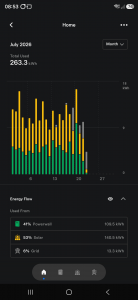
We generated 298.9 kWh as I write this article and we have consumed 263.3 kWh. To quote Mr Micawber: annual income twenty pounds, annual expenditure nineteen pounds nineteen and six, result happiness. Annual income twenty pounds, annual expenditure twenty pounds naught and six, result misery. We are using less than we’re earning, so we are very happy bunnies.

A graph showing our energy usage in July in terms of whether it is sourced from the grid or the solar or the battery.
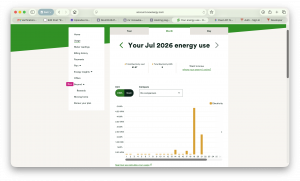
Our daily consumption in July from our supplier.

I’m noticing July is more than June, and your usage is really high.

Yes, there is a whole extra day in July, and that makes a difference.

Yes, we power an electric car. This makes electricity much more valuable for us: every unit we use to drive the car means we’re not buying petrol or diesel. We haven’t had gas heating our rooms or water since 2024.

We cook, clean (washing machine, hot water, vacuum, dishwasher), have powered vehicles, have lighted rooms when it is night, work, and entertain ourselves from our electricity. Electricity is doing everything for us.

It’s more than many people use, but it might explain the difference. When we’re asleep, our background usage is between 100 and 300 W an hour. Before we got the batteries, I worked out what was taking electricity, and if possible, changed the devices or our behaviour to bring our requirements as low as possible.

Before April, our base usage was 200 – 400W but we swapped out a router and its wifi extenders and that has made a huge difference.

The big question is, how long does your battery last?

We answered this question many times when we first had the EV!

During the summer, the 27kWh batteries provide two and half days guaranteed. Longer if we make an effort or are out of the house. I have connected to the grid for our free hours of electricity today.

This blog is now a podcast!

Well, “Driving off the grid” is.

Excited to announce that our journey towards sustainability has been transformed into a Spotify podcast!

“Driving off the grid” explores the steps we took to decarbonise our lives and the insights we’ve gained along the way. You can listen to the podcast here: “Driving off the grid” on Spotify, or on Audible or Apple.

This podcast is built from the research material I compiled for my blog. I hope you find it interesting and gives you with valuable insights into how we took our home from EPC C to EPC B, and beyond.