Main menu:

Site search

Categories

February 2026
M T W T F S S
 1
2345678
9101112131415
16171819202122
232425262728  

Tags

Blogroll

Job done

In May 1990, my parents bought a Stag Dinning Set: an extenable “ebony stained” table, six chairs including two carvers, finished in dusky pink velour.

Today I finished renovating the last carver in Antique Gold damak material.

Now I am heading for a relaxing soak before enjoying the fruits of my labour by having take out on the chairs.

Have a good one 🙂

Hold on a second, why do this?

Well, through the years, my family have built their own fortune, in 1990, the purchase of this dinning suite was huge for my parents.  When my husband and I moved into our first joint owned house, my parents lent this to us as a stop gap.

My son will one day have this piece of furniture and in the mean time we get to enjoy it.  Maybe one day, when my folks downsize, it will be ready for them too.

Half way through

0Having started my upholstery odyssey a few weeks ago, I have reached the magic half way stage and this is what I have learnt.

  1. A staple removal tool is worth its weight in gold.  I stripped four chairs in less than three hours.
  2. A staple gun is not enough, you need around 4,000 odd staples for a set of six chairs as for every single staple you successfully put in there are 10 which die through not going in properly, being ejected as test subjects, jam in the machine and come out as a second or even third which cannot be tapped in so need to be ripped out.
  3. You do get faster and generally better, even with the staple gun.
  4. There are upholstery shops in Ipswich that will cut the foam you need to replace to size and will sell you back fabric.
  5. You can get to the stage where going from the calico stage to the seat being screwed back into the chair in three hours.
  6. It is well worth making a template for the backing layer. It takes 30-45 minutes to install this last step if the piece is pre-cut.
  7. The tools list is as follows:
    • staple gun
    • staples – 8mm (calico and fabric) and 10mm (backing and corners)
    • metal hammer
    • pen knife (for pulling the staple gun apart when it jams)
    • long nosed pilers (generally for pulling out broken staples
    • staple remover
    • ceramic magnet (for collecting the discarded staples)

Pictures below:

In the lounge

In the lounge

In the hallway

In the hallway

The next steps are to finish the last chair, it is currently sitting looking pretty in its calico layer so needs the gold fabric cut and stapled in and the backing layer applied.  The last step is then to screw the seat into the chair.

I then need to strip the foam off the two carvers and apply the new foam, calico, damask and backing layers.  The last three steps should take half a day each.

I am not too sure how difficult it is going to be to remove the old foam.

Putting in the new depends on a smooth surface being left and then spraying in a strip of vinyl floor adhesive.  Stick that strip then work backwards to do the rest.  The glue is very fast drying so doing it in stages should allow for accuracy 🙂


Taking a chill pill

Since I’ve kicked off my training plan, my blogs are very focused.

What about the rest of life?  I have two main hobbies, riding my beloved motorbike and skiing.

This is not about motorcycling (I really need to get out on the bike…)

Taking a chill pill?

You need two things to alpine ski: snow and a slope.  We travel for these.  Here are some pictures from a couple of weeks ago.

The photos show the snow in Merribel, most of the way down the French Alps.

They show the weather, the sky, the peaks and slopes, fir trees and cafes.

This is our first holiday without our son, which was a bit strange.  He’s leaving home in September and it gave him space to concentrate on his A levels and us a chance to relax with just the two of us.

We drove down France from the channel tunnel: about an 8 hour journey with breaks along route.  We relied on our aging sat nav (2012 maps!) and google maps which got us all the way from home to the hotel.

Why?

I am very nervous about hurting myself on the mountains but I love the quiet of the mountain air and, if I’m honest, skiing itself.  It’s so different to my everyday.

It’s partly why I’m keen to stay fit and healthy and why I use an electric vehicle where I can.

The plan in a box

Here is the plan in a box, with some tracking:

Week no. Date Distance Aiming for (duration) And Did Average speed
1 18-Feb 1 x 25 miles, 1 x 10 miles Some hill training.  A day off in between. 2.5hrs, 1hr 10mph
2 25-Feb 1 x 35 miles,1 x 10 miles 30 minutes hill training.
3 04-Mar 1 x 35 miles, 1 x 10 miles 45 minutes hill training
4 11-Mar 1 x 25 mile, 1 x 10 miles A day off in between.
5 18-Mar 1 x 40 miles, 1 x 15 miles A day off in between.
6 25-Mar 1 x 40 miles, 1 x 15 miles 20 minutes hill training.
7 01-Apr 1 x 40 miles, 1 x 10 miles 60 minutes hill training.
8 08-Apr 1 x 40 miles 3 hours This is likely to be to Woolpit along route 51.
9 15-Apr 1 x 50 miles 5 hours Possibly up the A137.
10 22-Apr 1 x 50 miles 4.5 hours Gym work and 2 sets of hill training.
11 29-Apr 1 x 50 miles 4 hours Gym work and 2 sets of hill training.
12 06-May 1 x 50 miles 3.5 hours Gym work and 2 sets of hill training.
13 13-May 1 x 60 miles 5 hours 2 sets of hill training.
14 20-May 1 x 60 miles 5 hours Gym work and 2 sets of hill training.
15 27-May 1 x 60 miles 4.5 hours Gym work and 2 sets of hill training.
16 03-Jun 1 x 60 miles 4 hours Probably Felixstowe to Newmarket.
17 10-Jun Week off Just walking and motorcycling.
18 17-Jun 1 x 70 miles 7 hours Gym work and 2 sets of hill training.
19 24-Jun 1 x 70 miles 6 hours Gym work and 2 sets of hill training.
20 01-Jul 1 x 80 miles 7 hours
21 08-Jul 1 x 90 miles 8 hours
22 15-Jul 1 x 90 miles 7 hours
23 22-Jul 1 x 100 miles 8 hours
24 29-Jul 10mins Hill training, 2 sets
25 05-Aug Do the ride Do the ride

The route

The route last year may be seen here.

Last year's route

Last year’s route

Most of the profile (the layout of the route against sea level) is mostly easy running for the first 40 miles.  Quite East Anglican.

The second 40 miles is “rolling hills” and some “more physically demanding” sets.

The last 20 is much easier, not quite downhill all the way but not too bad.

Following James Fletcher’s advice, energy management is the key – hence my long training period.

It would be easy to say do the first 40 miles as quickly as possible as it’s mostly flat.  But we’re down to physical limitations.  My heart recovers from exercise very easy but I never get close to the 174 beats per minute I could probably do.  I generally top out at 160 bmp.

If I could do that first set at 15mph average rather than my planned 12.5mph, I could do that first 40miles in 2 hour 40minutes instead of 3 hours 12minutes.   Lets do something similar for the last 20miles, which is 1hour 20minutes.   Out of 8 hours that gives me 5 of the hard stuff.  That would allow me to drop my average to 12mph.  Uphill.

Mmm, plenty of dedicated hill training should see me through…

Back in the saddle, day 1

I have six months to train for the August deadline of the 100 mile Prudential Cycle ride and that means I need six months to prepare.

Today was taking that first bite from the elephant and I covered 25.7 in two sets: one of 20.5 miles and then a return home of 5.2 miles.  In total the average is 10.8mph.

The sun was shining, my blood sugar was not behaving itself but actually this was an interesting view on what cycling with high blood sugar would be like with a safety net (son at home for half-term and able to drive).

Getting ready to head out did not take too long, though with hindsight, I should have taken my camel pack!

Whoa, where are you going with this?

I trained: averaged 12mph for the first set and 9mpg for the second.  On that evidence, 100 miles is going to take me 9hrs.  Not a bad stab but I really want to do the ride in 8hours (with 30 minutes of breaks).

That’s an average of 12.5mph no matter the gradient and I suspect there’ll be some big hills out there.  It’s not East Anglia after all.

One of the things I’d really like to do by June is be able to ride from Felixstowe to Cambridge 71 miles.  I’m working up to that slowly.

Last year I went from 10miles to 47miles in seven weeks.

I’ve kept a base fitness up over the winter, but two months out after getting a bad stomach bug.  So six months should allow me to do that easily.

Week 1 (this week): 1 ride of 25 miles and 1 ride of 10 miles.  Some hill training.  A day off in between.

Week 2 (w/c 25th Feb): 1 ride 35 miles and 1 ride of 10 miles.  30 minutes hill training.

Week 3 (w/c 4th Mar): 1 ride 35 miles (different route) and 1 ride of 10 miles.  45 minutes hill training (I have a route).

Week 4 (w/c 11th Mar): 1 ride of 25 miles, looking at how close I get can to 2hours and 1 ride of 10 miles aiming for an hour max.  60 mins hill training.  A day off in between.

This is important as that’s an average of 12.5mph regardless of local gradient.  The 21st Feb, I am significantly under that.

Week 5 (w/c 18th Mar): 1 ride of 40 miles and 1 ride of 15 miles.  20 mins hill training.  A day off in between.

Week 6 (w/c 25th Mar): 1 ride 40 miles and 1 ride of 15 miles.  20 minutes hill training.

Week 7 (w/c 1st Apr): 1 ride 40 miles and 1 ride of 10 miles.  60 minutes hill training.

Week 8 (w/c 8th Apr): 1 ride of 40 miles, looking at how close I get can to 3hours.  This is likely to be to Woolpit along route 51.

Week 9 (w/c 15 Apr): 1 ride 50 miles (aiming for 5 hours), 2 sets of hill training.  Possibly up the A137.

Week 10 (w/c 22 Apr): 1 ride 50 miles (aiming for 4.5 hours).  Gym work and 2 sets of hill training.

Week 11 (w/c 29 Apr): 1 ride 50 miles (aiming for 4 hours).  Gym work and 2 sets of hill training.

Week 12 (w/c 6 May): 1 ride 50 miles (aiming for 3.5 hours).  Gym work and 2 sets of hill training.

Week 13 (w/c 13 May): 1 ride 60 miles (aiming for 5 hours) (average 12mph), 2 sets of hill training.

Week 14 (w/c 20 May): 1 ride 60 miles (aiming for 5 hours).  Gym work and 2 sets of hill training.

Week 15 (w/c 27 May): 1 ride 60 miles (aiming for 4.5 hours).  Gym work and 2 sets of hill training.

Week 16 (w/c 3 Jun): 1 ride 60 miles (aiming for 4 hours).  Gym work and 2 sets of hill training.  Probably Felixstowe to Newmarket.

Week 17 (w/c 10 Jun): Week off.  Just walking and motorcycling.

Week 18 (w/c 17 Jun): 1 ride 70 miles (aiming for 6 hours).  Gym work and 2 sets of hill training.

Week 19 (w/c 24 Jun): 1 ride 70 miles.  Gym work and 2 sets of hill training.

Week 20 (w/c 1 Jul): 1 ride 80 miles (aiming for 7 hours).

Week 21 (w/c 8 Jul): 1 ride 90 miles (aiming for 8 hours).

Week 22 (w/c 15  Jul) : 1 ride 90 miles (aiming for 7 hours).

Week 23 (w/c 22 Jul): 1 ride 100 miles (aiming for 8 hours).

Week 24 (w/c 29 Jul): Hill training, 2 sets, 10 mins each.

Ride the ride 4th August.

Traumatic times

The past two years, for me, have had some interesting times.  I came off my push bike, a panic attack while skiing, I forgot my cannulas in Canada and had to completely overhaul my insulin treatment for 8 days and the resultant big hypo and the removal of my fixation plate (remember to do that much earlier next time).

In some ways, it probably looks like I have taken all this in my stride.  I get up normally, get my arse to work and keep my levels pretty reasonable.

But it’s been exhausting.  My requirements have fluctuated wildly and I’ve lost many of my hobbies in the background.  Since the ride in October, I’ve lacked a focus outside of my obvious work.

I have discipline, with the type 1 that makes things so much easier, but on the odd occasion, that feels like going through the motions.  It’s one of the reasons I am so keen to do the furniture!

I’m planning to do a motorcyle ride in June (heading out with a group to France) and of course I have my 100 mile cycle ride in August and October.

I take the time to smell the roses too and now it is a bright and beautiful day, I do really need to clean the inside of my office windows.

That should tide me over 😉


Doing something different

They say a change is as good as a rest.  As a programmer who has spent much of the past few months working out how to automate cloud building, I thought I would take the opportunity to learn how to re-upbolster some chairs my mum had lent us as a stop gap when they bought a new dining suite and we bought a house with a dining room.

That was 18 years ago and the suite was not in its first flush then.

I’ve been planning on redoing the cushions on the drop in chairs for a while but when my parents did this on their very first dining set, it was quite a different job and I was more than nervous.

While taking in the local town, I noticed fishface in Ipswich’s The Walk offered upholstery classes.  That was a while ago because there’s quite a waiting list.

The class was friendly: five other students were all of a similar standard and Penny takes you through the steps of stripping down your furniture (with all the right tools) and then putting it back together.  You even get lunch and coffees from the cafe downstairs.

My project aims to take four chairs and two carvers from blush pink velour covers to gold damask (before and after photos coming up):

Before

Before

After

After

Very nice, so what?

This simple act took nearly six hours and I am chuffed to bits with the results but that makes 30 hours left to do the remaining chairs!

Stripping the seat back to panel and foam is half  the job and is not for the lighthearted.  You need a drapers  staple remover and a suitable mallet – plastic for a plastic handled staple remover and wooden for a wooden handled one.

Take out each and every staple.  This takes time and is non trival – plan to do this in the morning and after lunch, do the rest of the job.

Stripping

For this seat there are two bits of fabric to remove: the backing and the decorative pad cover.  Being a “modern upholstered piece of furniture” means that is stapled to a bit of ply or thin MDF.  There are 40 odd staples holding on the backing and around 50 pinning the decorative cover in place.

After the 15th one, you are promising yourself you don’t need so many so it will be easier next time.  You are fooling yourself!

Once the stripping is down you then cover.

Covering

There are three stages as the foam was in one piece.  First is a calico cover to give a uniform finish.

Next is the decorative one, going directly over the cailco.

Finally, a backing to finish it all up.

You will notice, we’ve put an extra layer on: which is more staples.

I’m not going to be the one to redo this dining set 🙂

Why don’t you just pay someone to do this for you?

The alternative is paying someone who has all the right equipment to do this for you.  I’ve spent about £100 on the fabric.

This took me 5 hours to do one chair.  I think I could do a chair in 3-4 hours next time as I won’t be working it out for myself.

This job requires skill and training.  Let’s say the pro only takes half a day as a max – six chairs would therefore take three days.

That’s if you don’t need foam or any re-webbing.  Plus disposal fees and business rates, insurance etc.

Let’s do it, let’s talk…

Food.  Boring for many but as a type 1, I need to understand what I eat when.

I left home and believed that I knew what a portion looked like.  I got takeouts and shared rice or noodles and used that as my yard stick.  I bolused reasonably and had cerals in a similar manner.

When my boyfriend, later husband, moved in, we cooked at home pretty happily – I was 25 at the time and he was 32 – we knew what we were doing.

I got a bit of a shock when I realised we’d eaten a 5kg bag of rice in two weeks.  Let’s say we’d had rice for one meal each of those 14 days – that’s eating 178g of dry rice each a meal.  I suspect significantly more.

I looked on the back of the Tilda rice bag to find we should be having 50-75g each a serving.  So that’s what I did, 50g each.  The portion looked tiny when cooked.  I mean, seriously, seriously mean.

I served it up: my lover gave me a look.

It was a shock though, we were full at the end of the meal.  I did the same with pasta, 50g dry pasta, and not only did we feel satisfied but actually enjoyed the meal more.  It wasn’t an effort to eat.  We even slept better.

When my son was born, we sized up his meals accordingly and never made a fuss if he didn’t finish it all.  My son has puddings most meals, we don’t every meal.

I measure all my grains and dry carbs (pasta etc).  I guess the rest.  My liquids are all against a set of 250ml glasses or out of 150ml cans.

Cereals are always measured.

We cook Yorkshire puddings from recipes not from frozen or precooked ones.

Everything?

OK, if I eat out, it’s not measured but if we eat out, I compare that to home and it’s unusual if I don’t get the bolus near the right value.

I’m finding, I don’t really enjoy puddings.  The ones I cook at home don’t follow the recipes completely: I’ve cooked a fruit crumble tonight and I don’t put sugar in with the fruit.  I don’t “dust” the top with extra sugar.  It’s got more flavour and bite as a result which I cannot get out from a restaurant.

I make my own lemon meringue pie: again no sugar in the lemon and I use a lower amount of sugar in the meringue.   The result is a pie that bites back.  The meringue is soft and caramelled.  It’s morish, tasty but not sickly and doesn’t need so much insulin.

That’s not to say I do this once a day.  I make lemon meringue pie twice a year at most.  On a Sunday for after Sunday lunch.

A lesson in stress

Readers of my blog know that I am a professional in the IT industry but some of the tools and techniques that we use in that industry are things I have been doing as a type 1 diabetic since I was 8.

One of the key things is reviewing a new situation and working out what worked and what did not so that the next time I encounter that situation,  I can get my insulin as close to normal as possible.

Tell me all about it

I talk about how stress impacts my blood sugar and therefore my insulin requirements because my body cannot do that itself.  Longer term stress is not sustainable in my body – so even if my mind is still stress, the normal flight and fright response fails after a period.  Over the past few months, I have been in a very stessful situation that peaked since Christmas.  Because I had other distractions, the impact on my blood sugar had been very small apart from a few notable days , after Christmas. those distractions disappeared and all I have been left to focus on is my current predicament.

It’s caused me to lose weight and my late evening blood sugars have been very high (typical of stress – I had a similar pattern for my GCSEs, A levels and finals.  Not so much for my apprenticeship because that was only in 9 week blocks so there wasn’t time for a sustained stress event).

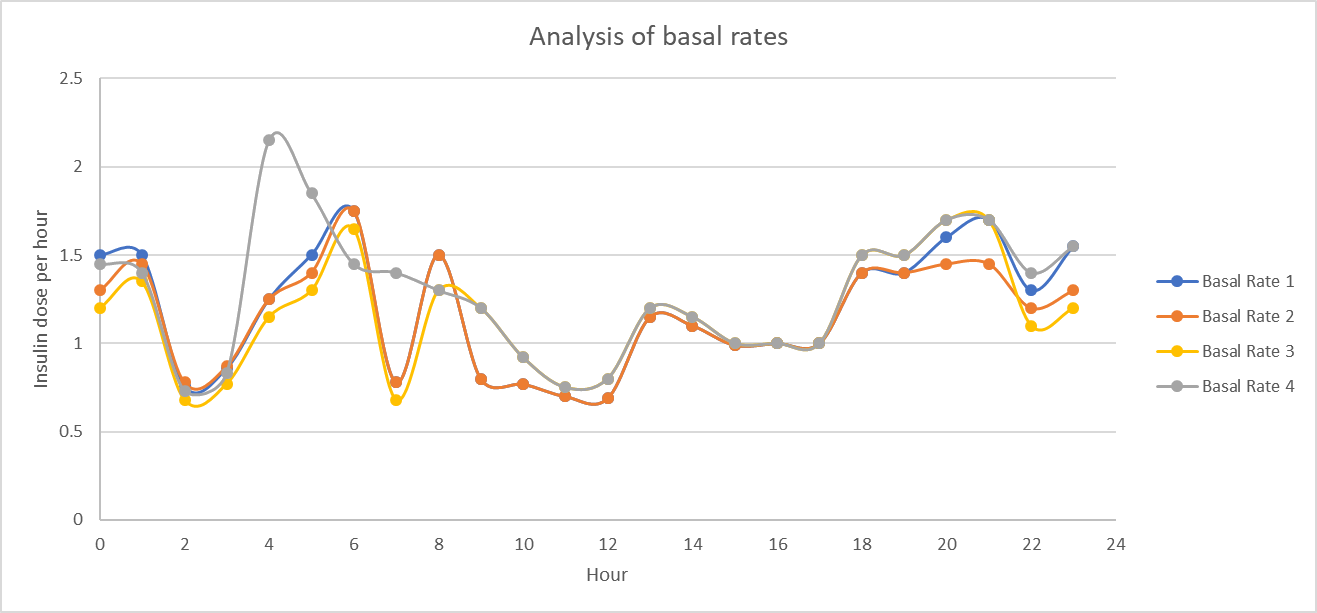
I modified my basals to cope and basically waited for the climax – in my case a couple of two hour meetings: the last one yesterday.  Because of the measurements I had from the last one and my distress while discussing certain things (in itself a stress event), I used the measurements and planned to get my blood sugar as low as possible: with stress, the release of the stress hormones is not guaranteed, especially over such a prolonged period, but that was the model I had in mind.

The day itself was very different – I had a dramatic drop in blood sugar levels the day before and actually entered the day on a reduced basal rate.

Given the image below, you can see where I was when I woke at 06:10.

look at this detail

Doesn’t look so bad

it really doesn’t, does, it?  Given I had some time on my hands before the meeting at 2pm, I could actually focus on what was happening.

OKAYYYY

By that, I mean I could look at my capillary blood results and compare them.  I’ve known for some time that capillary blood and interstitial are not exact matches, the leaching of sugar from the blood to surrounding tissues and interstitial fluid takes my body between 10 and 17 minutes.  I’ve known it’s not great at measuring highs – it’s out and becomes increasingly out the higher I am.  If my blood sugar is above 6.5mmol/l, that’s a pretty linear scale in the normal course of things but of course, this is an exceptional event.

Let’s do that comparison now, in the graph, the capillary blood testing are the purple blobs:

and here with the comparison

Time Interstitial glucose reading Capillary blood glucose
12:39 13.7
12:52 13.2 20.3
13:09 10.4 17.2
13:17 9.1 14.5
14:06 6.1
14:36 4.3
14:43 4.7 9.8
14:57 6.4 13.9
15:29 7.9 16.5
17:08 4.2
17:19 3.6 2.2
17:36 2.7 3.6
17:04 Not scanned 4.1
18:31 5.7 6.8
19:00 4.5
20:05 4.9
20:14 5.7 10.7
20:33 7.1
22:01 9.4
00:35 4.4

There’s no correlation – that’s not a percentage out, the interstitial sensor did not pick any of this up!

It doesn’t look like it, does it?  Unless we look at the lower readings which follow the delayed rule.  The Libre missed the 20.3 completely and the pattern shadowed the high blood sugar but did not reach the same limits.

Abbott report that the sensor is not good at picking up rapidly changing levels precisely and maybe in the case of a severe flight and fight response, that is why the misalignment.  May be the stress hormones themselves stop glucose leaching out or block the sensor like paracetamol/acetaminophen does for older sensors but it explains why I feel so rotten at the moment if my Libre readings are above 7mmol/l!

Learnings?

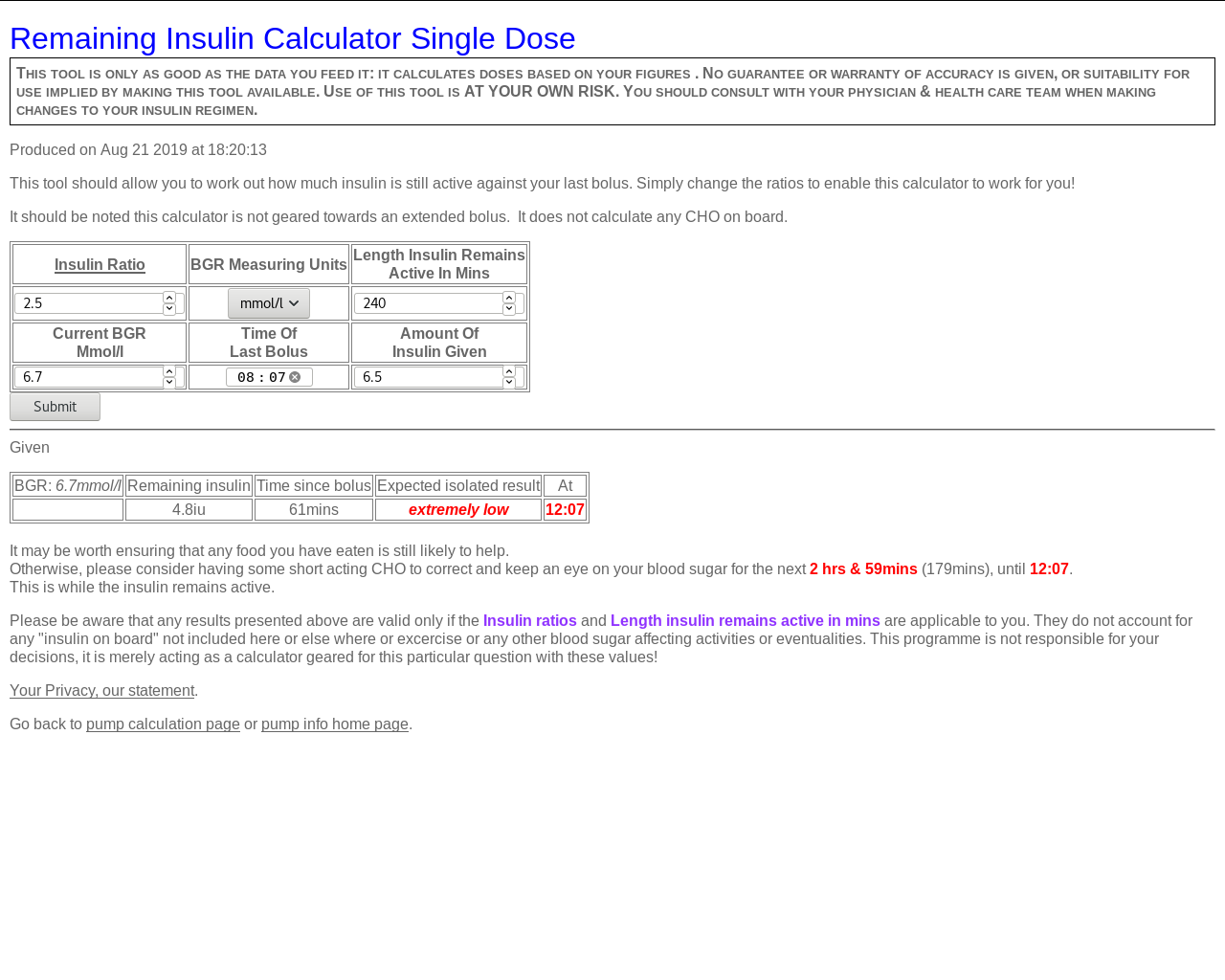
I haven’t mentioned my learnings.  On finding I was 20+ mmol/l, although I’d already given 4iu by my pump, I gave a bolus of 10iu via injection.  Hence the monitoring: when I got to 9mmol/l, I had a mars bar and taking the Libre at its word on the drop, had a 21g CHO via glucose gel.  I firmly believe the gel was a mistake – I felt low, the graph suggested I was dropping but actually I was still kicking out at least cortisol.

I should have waited until 15:30 when the meeting was called closed and had it then to cover the drop from the cortisol.  I only had the 15iu bolus between 13:01 in my system which would have been completely out by 17:01 to bring down my glucose so the drop between 16:58 and 17:10 was purely the stress hormones being stopped.

I call this the cliff face drop and I only get it with prolonged stress!

My biggest concern is the cause of the stress.  I always say I don’t sweat the little things, people being rude is meaningless and up to a point, some of the stupid things people say about my type 1 are down the ignorance and I often try to educate those people about the situation us type 1s are in.

But I normally can talk about these things as funny anecdotes.  I’m so stressed at the moment, the frustrated is coming out as anger and my normal coping mechanisms are not working.

I’m thinking some short therapy is the next logical step?

Or is this a quantum thing, does opening the box, change the state of Schrödinger’s cat?

That’s a difficult question to answer.  I really don’t know.