Main menu:

Site search

Categories

February 2026
M T W T F S S
 1
2345678
9101112131415
16171819202122
232425262728  

Tags

Blogroll

A lesson in stress

Readers of my blog know that I am a professional in the IT industry but some of the tools and techniques that we use in that industry are things I have been doing as a type 1 diabetic since I was 8.

One of the key things is reviewing a new situation and working out what worked and what did not so that the next time I encounter that situation,  I can get my insulin as close to normal as possible.

Tell me all about it

I talk about how stress impacts my blood sugar and therefore my insulin requirements because my body cannot do that itself.  Longer term stress is not sustainable in my body – so even if my mind is still stress, the normal flight and fright response fails after a period.  Over the past few months, I have been in a very stessful situation that peaked since Christmas.  Because I had other distractions, the impact on my blood sugar had been very small apart from a few notable days , after Christmas. those distractions disappeared and all I have been left to focus on is my current predicament.

It’s caused me to lose weight and my late evening blood sugars have been very high (typical of stress – I had a similar pattern for my GCSEs, A levels and finals.  Not so much for my apprenticeship because that was only in 9 week blocks so there wasn’t time for a sustained stress event).

I modified my basals to cope and basically waited for the climax – in my case a couple of two hour meetings: the last one yesterday.  Because of the measurements I had from the last one and my distress while discussing certain things (in itself a stress event), I used the measurements and planned to get my blood sugar as low as possible: with stress, the release of the stress hormones is not guaranteed, especially over such a prolonged period, but that was the model I had in mind.

The day itself was very different – I had a dramatic drop in blood sugar levels the day before and actually entered the day on a reduced basal rate.

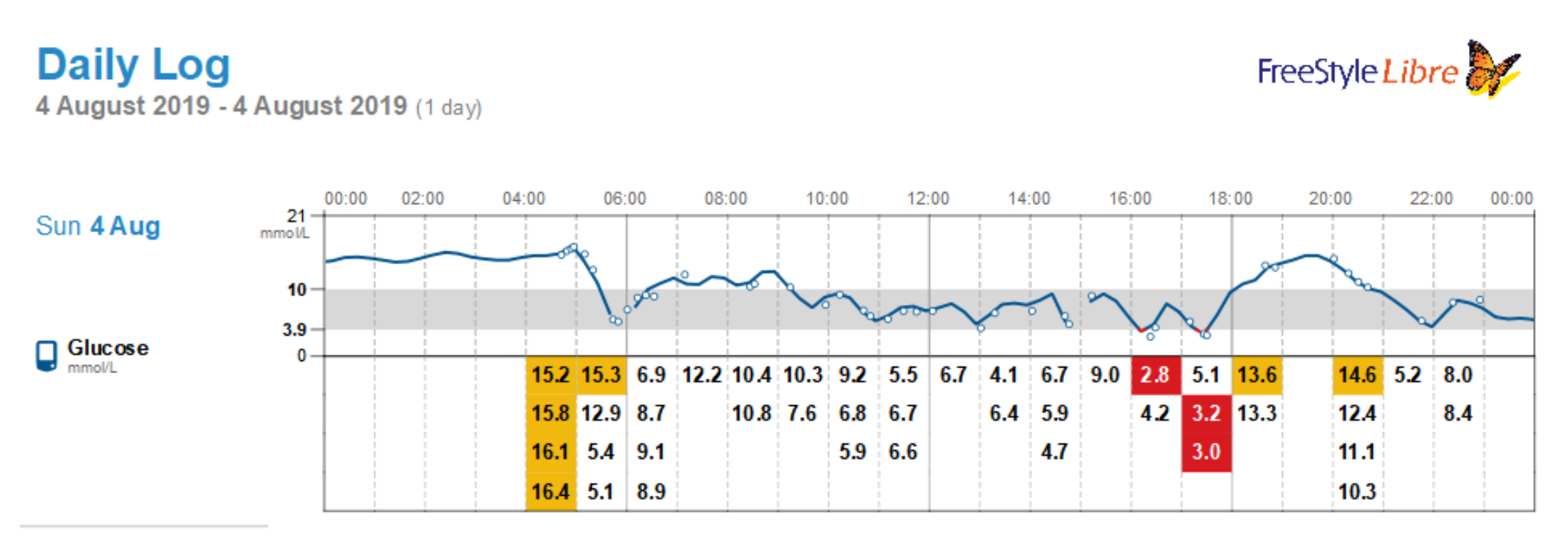
Given the image below, you can see where I was when I woke at 06:10.

look at this detail

Doesn’t look so bad

it really doesn’t, does, it?  Given I had some time on my hands before the meeting at 2pm, I could actually focus on what was happening.

OKAYYYY

By that, I mean I could look at my capillary blood results and compare them.  I’ve known for some time that capillary blood and interstitial are not exact matches, the leaching of sugar from the blood to surrounding tissues and interstitial fluid takes my body between 10 and 17 minutes.  I’ve known it’s not great at measuring highs – it’s out and becomes increasingly out the higher I am.  If my blood sugar is above 6.5mmol/l, that’s a pretty linear scale in the normal course of things but of course, this is an exceptional event.

Let’s do that comparison now, in the graph, the capillary blood testing are the purple blobs:

and here with the comparison

Time Interstitial glucose reading Capillary blood glucose
12:39 13.7
12:52 13.2 20.3
13:09 10.4 17.2
13:17 9.1 14.5
14:06 6.1
14:36 4.3
14:43 4.7 9.8
14:57 6.4 13.9
15:29 7.9 16.5
17:08 4.2
17:19 3.6 2.2
17:36 2.7 3.6
17:04 Not scanned 4.1
18:31 5.7 6.8
19:00 4.5
20:05 4.9
20:14 5.7 10.7
20:33 7.1
22:01 9.4
00:35 4.4

There’s no correlation – that’s not a percentage out, the interstitial sensor did not pick any of this up!

It doesn’t look like it, does it?  Unless we look at the lower readings which follow the delayed rule.  The Libre missed the 20.3 completely and the pattern shadowed the high blood sugar but did not reach the same limits.

Abbott report that the sensor is not good at picking up rapidly changing levels precisely and maybe in the case of a severe flight and fight response, that is why the misalignment.  May be the stress hormones themselves stop glucose leaching out or block the sensor like paracetamol/acetaminophen does for older sensors but it explains why I feel so rotten at the moment if my Libre readings are above 7mmol/l!

Learnings?

I haven’t mentioned my learnings.  On finding I was 20+ mmol/l, although I’d already given 4iu by my pump, I gave a bolus of 10iu via injection.  Hence the monitoring: when I got to 9mmol/l, I had a mars bar and taking the Libre at its word on the drop, had a 21g CHO via glucose gel.  I firmly believe the gel was a mistake – I felt low, the graph suggested I was dropping but actually I was still kicking out at least cortisol.

I should have waited until 15:30 when the meeting was called closed and had it then to cover the drop from the cortisol.  I only had the 15iu bolus between 13:01 in my system which would have been completely out by 17:01 to bring down my glucose so the drop between 16:58 and 17:10 was purely the stress hormones being stopped.

I call this the cliff face drop and I only get it with prolonged stress!

My biggest concern is the cause of the stress.  I always say I don’t sweat the little things, people being rude is meaningless and up to a point, some of the stupid things people say about my type 1 are down the ignorance and I often try to educate those people about the situation us type 1s are in.

But I normally can talk about these things as funny anecdotes.  I’m so stressed at the moment, the frustrated is coming out as anger and my normal coping mechanisms are not working.

I’m thinking some short therapy is the next logical step?

Or is this a quantum thing, does opening the box, change the state of Schrödinger’s cat?

That’s a difficult question to answer.  I really don’t know.

I love a good plan

In What does exercise do to your blood sugar levels? I shared what I did for the 47 mile (45 mile my ****) Palace to Palace run.

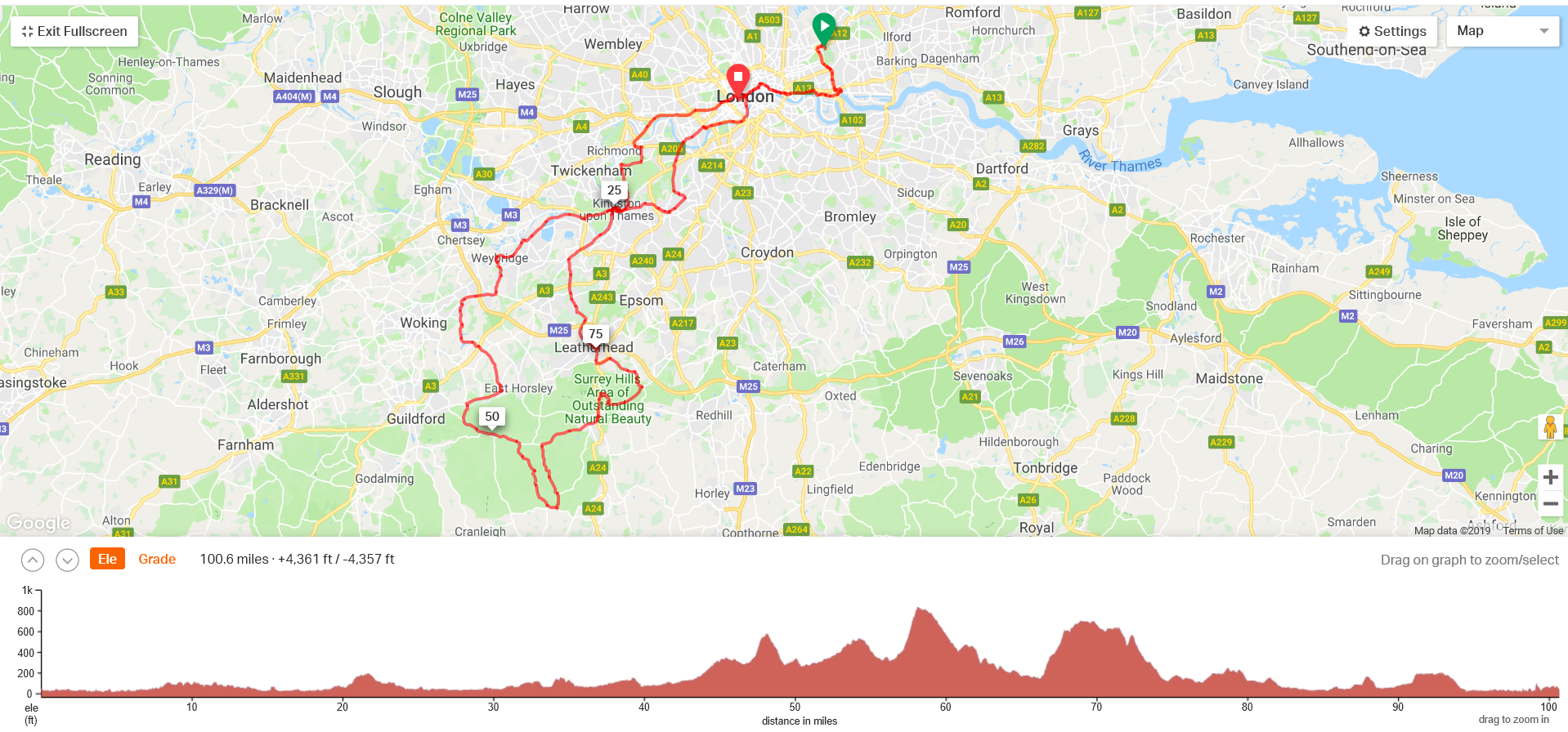
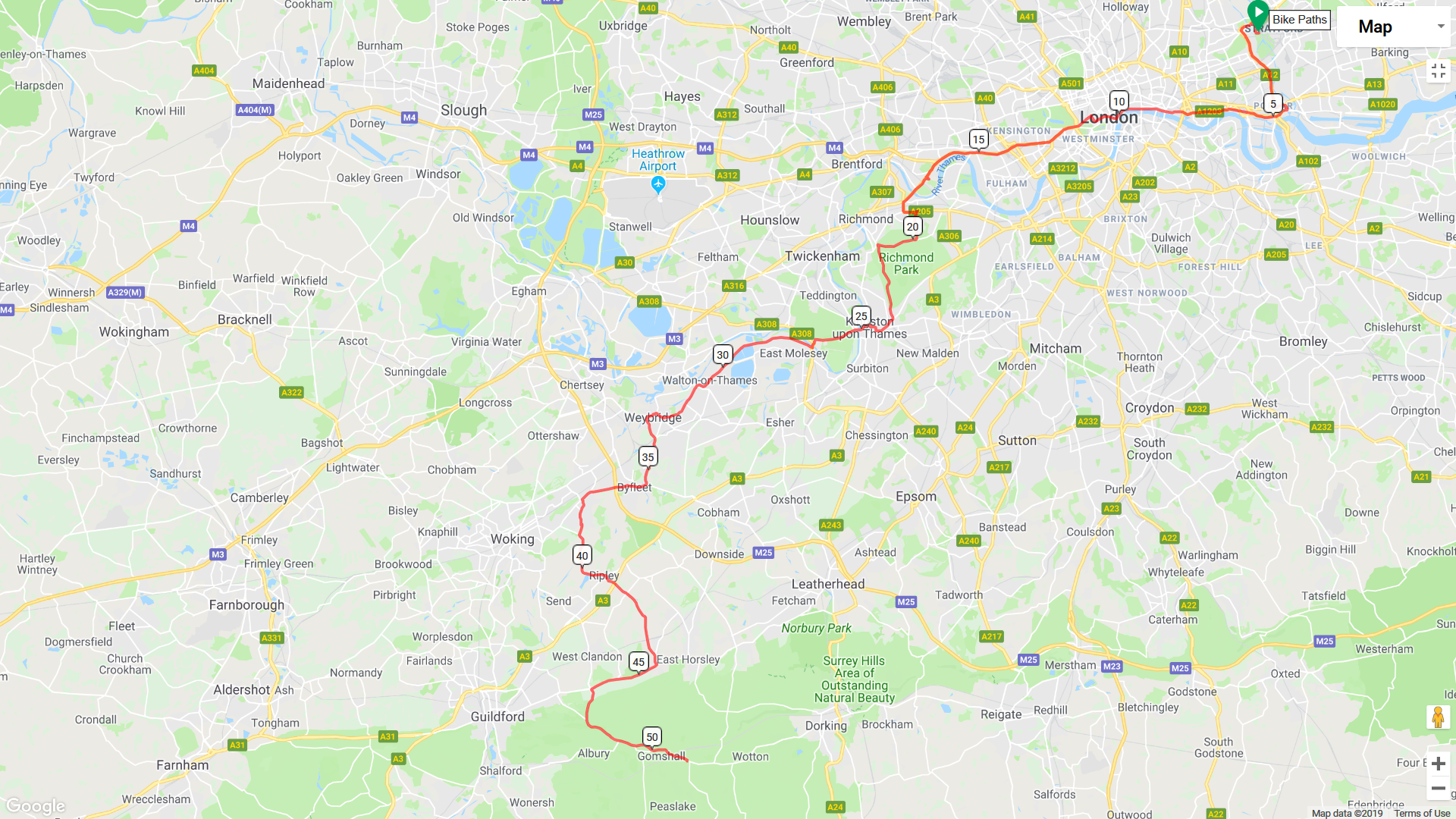
Planning for 100 miles should be similar.  I am not looking to break any record (though doing it in 8 hours would be amazing), just make it to the end in one piece.

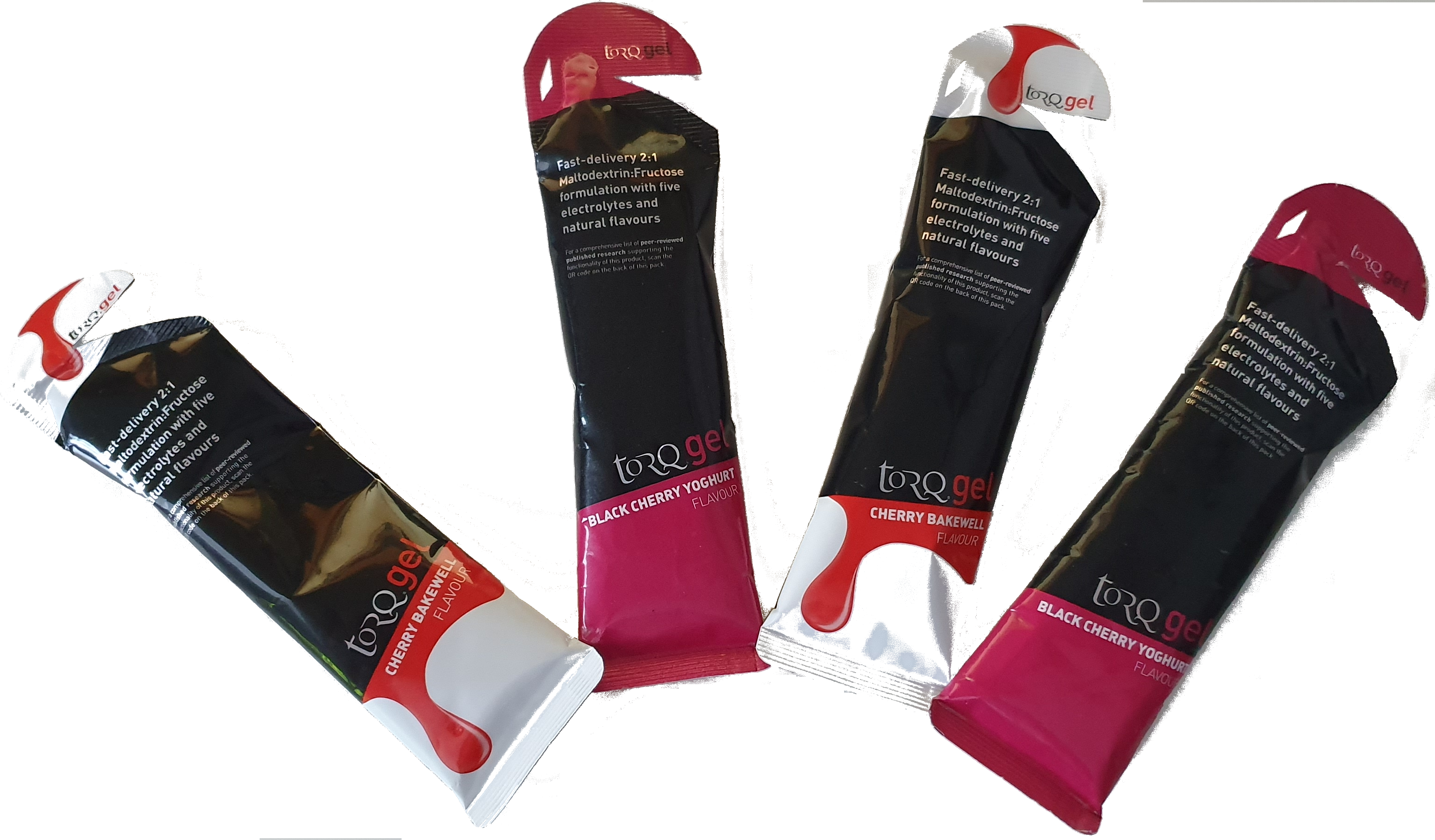
Taking to an experienced long distance cyclist with type 1, James Fletcher, I am going to make use of glucose packs to give me an extra boost at 50 miles and 75 miles as well as the coke and Soreen.  I am planning on a light lunch (maybe pasta salad) around noon.

Having finally gotten over my bug from the new year, I am feeling a bit more energetic.  The biggest shock was how tiring even walking has been the past couple of weeks. I am heading into London on Friday before travelling on a skiing trip.

Maybe I’ll do an easy session at the gym later.

Price caps appreciated

I live in the UK, which is lovely in the fact that no two months are precisely the same in terms of weather and our flora and funa respond to that.  In the summer, we have amazing blooms, the crops grow tall, etc, etc.

It makes budgeting your household bills non-trivial.  Even our esteemed meteorologists strangle with predictions on how cold it’s going to be from one day to the next.

If you are watching every penny to make ends meet, it can be a real worry to turn up the heating to cope with a cold snap.  The government chose to help everyone by introducing a price cap to ensure that the private market did not run wild.  I do believe in free markets but regulation to ensure natural monopolies and cartels due not form for essential services, such as power and water is the best of entrepreneurship and government owned businesses which can stagnate.

One of the things we get from our supplier is a comparison between our energy use and comparable houses (in terms of age, size and number of occupants).

Electricity wise, we do very well considering we have a work at home adult and run an electric car!

Electricity use

Electricity use

We do have solar panels mitigating some of these behaviours but even so, we’re using a good 60% less than the average in the area and our usage a month last year was between 275 and 467 kWh, an average of 354kWh.  Our annual total last year was 3.893MWh.

Our gas usage is really low over the winter (I’m guessing our thermostat usage, zone management and insulation help here) and while we’re a little high in the summer at 507kWh, our highs are significantly better than average maxing out at 3257kWh in January.  Our average is 1.756MWh with an annual total of 21.075MWh.

Gas consumption

Gas consumption

All fine and dandy, so what?

Good question.

The reason I’m writing this today is with the UK leaving the European Union is there are going to be some big questions asked about the average footprint in the developed economies, including the UK.

Sales of diesel cars have plummeted and petrol car sales have stagnated.  Congestion is a big issue in most towns in the UK, so the obvious answer of buying an electric car to save some cash and avoid the penalties likely to be levied toward ICE is not a long term strategy.

The UK looked at removing some of the incentives towards micro-generate of energy in terms of the feed in tariffs for solar cells: the consensus was it was too early to do that.

Looking at the charts above, we’re a long way from generating all our electricity requirements from our solar cells (we generated 3.4MWh last year, so our total energy bill should have been 7.293MWh) and we’re feeding the majority of that back into the grid because it’s being generated when we don’t really need it.  Take our give and take graphs below:

Generating power 1st Sept 2018

Generating power 1st Sept 2018

Consuming power 1st Sept 2018

Consuming power 1st Sept 2018

While we’re generating our peak, we’re not really making use of it (my husband tends to have a cold lunch for example).

So, if there’s no feed in tariff, it makes little sense to not store what we’re not using.

Batteries are not that efficient though, are they, especially per kWh?

They don’t need to be, if they are priced effectively.  There’s also the question of whether or not we’d make more use of solar water heating and extra voltaic cells too.

Smart homes could power the big items, like the dish washer and the washing machine while peak power is being generated from the solar cells rather than manually spotting the correlations – a quick wash uses far less power than a 60ºC 2 hr one for example.

A third of all businesses in the UK are now generating their own power and smart use of heating and lighting is helping many reduce their bills.  The UK finally produced more power by renewables than fossil fuels in 2018 (just).

We’re keen on the idea of combined heat and power in the home, but there are ground pump sources too.

My next big project is the use of  EvoHome to help reduce our gas usage some more.  The beauty of that system is we’d zone the upstairs which has 10 radiators managed as a single zone today.

Energy sources in the UK

It’s easy to think of solar as being the only renewable used in the UK.  Actually we have a long history of harnessing much more than daylight:

  1. Nuclear (21%)
  2. Wind (15%)
  3. Solar (4%)
  4. Hydroelectric (2%)
  5. Gas, coal and other (58%)

(These numbers came from various sources on the internet).


Living the dream

Home automation is a hot topic but along with the ability to control multiple devices on a pre-programmed schedule or from the other side of the world comes that nagging feeling: is it secure?

This is a complicated question to ask and answer.  What do you mean by secure?

For me, in home automation I look at three basic questions:

  1. Will my request work?
  2. Will my request expose anything I don’t want to?
  3. Will my request damage anything I care about?

Answering these questions help us assess the risk.  Or that’s how the professionals in this area sell it.

Part of my home network is exposed to the internet, using a BT infinity network and router.  As such, I use port forwarding to allow some holes in my firewall to get to some servers.  This is very basic perimeter security.

To allow my web pages to work, the firewall talks to my web server and the 5 applications I use to present my work to the internet all flow through that single, TLS 1.2 encrypted port.

Why?  Well, TLS or transport layer security gives me a means to protect me and my users when they need to login to one of my apps by encrypting the passwords and other data flowing between their apps and browsers and my server.

My web server also contains a proxy so that certain addresses can be directed to the right kind of web server.  My pump tools is a great example of that: https://samjwatkins.com/pumps maps to a completely different server with a very different set of capabilities to the one serving the web page you are reading.  As an end user, you don’t care and I protect you and the server by hiding that detail.  It also allows me to do the pump tools without any kind of login and I don’t store any data at all, which makes me GDPR compliant from day 1.

All very nice.  But what about the home automation?

I control my heating and my lighting through two different suppliers: Heatmiser makes my heating and TP-Link my lighting (and smart sockets).

Both provide a means to control remotely, i.e. if I am not connected to my home network, I can still find out if I left my bedroom light on for example, and remedy the situation if I did.

Or if I am coming home early, I can ask the central heating to come on a little earlier than planned because it’s turned really cold outside.

I got the Heatmiser thermostats back in 2011, when the second two areas of security weren’t really at the forefront of this technology.  As such, if I want to encrypt the data between the user and the device (to protect the password for example), I have to use a proxy on my web server.

Which I can do, but it’s all a bit fiddly.

The other thing that starts to breakdown are the web apps.  They rely on my home router being able to do port forwarding.  Which is great to a point, but the increased security on today’s browsers means that’s not trivial to test.

Then there’s things like the WPA2 passwords: my devices do not allow you to get these unless you directly connect your laptop to them via a usb cable.  Then the network password is available to all!

To give us peace of mind, we’ve put the Heatmiser thermostats and the TP-Link smart lights on a separate “guest network”.  Still protected by a password but traffic on this network cannot talk to the rest of the house.  Magic.

Anything on the home networks can talk to the devices but anything obtaining the network password can only talk to the devices and then only with the passwords.

Perfect.

Then again, when it does work…

When I read my blog, I sometimes feel like it must seem like a bit of a whinge.

Type 1 diabetes can be mindblowingly frustrating as no two days are the same and much of the theory regarding what you should do does not cope with the edge cases when the normal rules do not apply (yes I do appreciate the 1600 rule for correcting highs, but that has not really come up all that often).

When it does work, the feeling is amazing and not just because you are not high or low.  I had that last Wednesday.  Using my Insulin on Board Calculator and my Carb calculator, I had treated a low and was seeing how things panned out.

My basal rate had dropped back to basal rate 1 and my treatment of the hypo was obviously spot on as can be seen from my read out:

I took my 10:34pm reading and fed it into my Insulin On Board Calculator.  I was feeling good and by chance happened to look at my meter again just as the time was up on my Insulin on Board calculator.

The two values was spot on.  We have a saying in the type 1 community of “an unicorn” – that’s when you’re blood glucose meter reads precisely 100mg/dl because it’s really rare.

That moment last Wednesday when everything lined up felt like my unicorn, despite an unpromising start.

How it comes up…

Thanks to the majority of people being well fed these days, being ill is unusual.  I’m not talking about the odd cold that refuses to shift, but an actual viral infection.

As seen from my last post, Sometimes, it just doesn’t work, I should have guess that something was brewing.  It didn’t actually hit until New Year’s Eve – I felt a little knackered but not unexpected given the battles with my blood sugar.  The 30th Dec 2018, I had 82iu over the day (I was fine if I didn’t eat, yet every bolus for food seemed to be ineffective and my bolus to carb ratio increased from 1iu to 10g to 3iu per 10g) compared to 38iu on Christmas Eve.

My husband was feeling grottier than I was and despite making  it down the hill  to our local, we left earlier than planned and my husband headed for bed at 21:30.  He started being sick at 22:30.  My blood sugar was still being a little stubborn, but not eating for the majority of the day had helped a great deal and things were a little high but I made arrangements that our son would stay over a friends to ensure he would reduce his exposure (he had school today).

I popped up, made sure he was OK and got him some water.  I got myself some too.

I couldn’t get my sugar below 8mmol/l so waited for the New Year and ensured the  next three times my husband lost his food didn’t cause him any issues.

InsulinOnBoard

Insulin On Board

I finished some changes to the insulin on board calculator: if you’re a user, you may notice that the output has been updated to allow multiple results to be displayed.

But didn’t feel that sleepy so took the work to the next stage for a multiple dose calculator.  It has a long way to go, not least in terms of testing, but I am making some progress on this more complex modelling which catches a few of us out.

Although still not sleepy, I did need the loo suddenly at 01:36 New Year’s day and found I that I had the bug too – bad diarrhoea and then I started being sick!

Some water helped clean my palette and I cleaned out the toilet and got into bed.

Finally my blood sugar dropped.  I took water and simple carbs and that day I didn’t need to miss with my basal levels – things just worked and my daily intake was only 42.9iu.  In fact, since my blood sugar hasn’t been above 10mmol/l and my intake hasn’t been above 60iu even though I am now managing one small meal a day.

That meal is still causing a small issue, but a temporary carb ratio of 3iu sliding back to 1iu per 10g seems to be working well.  I’m taking off 0.5iu a day.

I’m not 100% over the bug yet, but I’m progressing well and am not that far behind my husband’s healing rate 😀

Sometimes, it just doesn’t work

One of the most dispiriting things about type 1 diabetes is that sometimes, it doesn’t matter what you do, it just doesn’t work.

Christmas is hard work normally as the normal routine and eating practices are binned in favour of having fun.  Feasts are consumed, wine (and other liquor) is consumed, it’s hard to take yourself off somewhere quiet to figure out exactly how the unusual food should be bolused for.  During this time, I don’t aim for perfection – survival is the game here and after 41 Christmases, I don’t do too badly.

But it doesn’t lose the fact that I am functioning as my pancreas and things don’t always go to plan.  Last night was a great example of this.

Tell me all about it, hon?

Er, OK.  Having cycled to my local gym, had a swim and headed back, everything looked great.  I’d coped with the exercise, food was finally semi-sane and I’d been dry for a couple of days.  This could not be said for my blood sugar.  My Libre showed a steep climb after tea (a lovely chilli con carne, home cooked from scratch, everything weighed out and calculated in terms of carbs and protein).

High peaks

High peaks

By 19:30, it was obvious something was badly wrong, and indeed my blood sugar measured 14mmol/l (normally an hour after such food, I would expect to be 10mmol/l) so I gave a correction dose of 10 units – which should have been more than enough to do the job.

By 20:15, I was up to 15.9mmol/l – the correction had not worked at all and it was now obvious that the cannula dripping the insulin into me was not working.  I replaced the cannula and retested – now 17mmol/l and climbing by the minute.

I made sure the pump cable wasn’t occluded: that’s blocked to you and me.  Insulin was indeed coming out of the end so I reattached and primed the cannula and me.  Another 10 units.

It was still climbing with no hint of a slow down.  I gave a further 4 units at 20:55 and finally at 21:10 there was evidence things were coming back down.  Hypos are typically quicker to treat, so I worked out I probably needed 30g of CHO and had an early midnight feast: toast, ceral and a 150ml of coke.

It was looking great, 5.5mmol/l, so I headed to bed at 01:37 the next morning.

And woke up at 3am with low blood sugar I just couldn’t pick up: my husband did the honours of navigating the stairs when the stores by the bed were consumed.

According to the fit bit I got 5 hours 21 minutes of sleep but given I was below 3mmol/l the whole night, it wasn’t a great night of sleep 😉

Hope your night was easier.


Best laid plans of mice and men!

I hope you’ve had a great Christmas. We went to my parents, my men visited my sister in law and family and then headed home. This is a short note discussing some bright ideas and how we worked round some limitations.

Eh?

Like many working families, the holiday season is a chance to catch up on odd jobs round the house. One of these is fitting some cupboard lights to our newly fitted bedroom cupboards.

When the house was built as a custom house for the previous owners (think Grand Designs), my wardrobe was built in under the eaves and had the electrics in for a cupboard light. We’ve taken that out (ironically, I have more storage space by taking out the walk in cupboard) and I put in some LED batons fixed to the door frame. The light is incredible and half the cost of the compact fluorescents I’ve replaced.

But that left a number of cupboards without any automatic lighting.

A search on Amazon and I found this neat solution: Cosoro Cabinet Light.

Hinge light as they arrived

Hinge light as they arrived

It looked ideal, automatic LED lighting, no wires to fit anywhere and only a tenner!

I ordered them and they duly turned up: let’s start fitting them.

Only, they did not fit on our hinges, at all. Our cupboards came with suitably different hinge mechanisms. Oh dear, or words to that effect.

Kitchen hinge light

Kitchen hinge light

We had more joy on a downstairs kitchen cabinet but that wasn’t really the idea! My husband had a great idea – why not fix the light to the frame?

He did just that and low, there was light!

Hinge light installed elsewhere

Hinge light installed elsewhere

Should, would, could

I hope you are well.

I have wiled away my hours not smelling the flowers but wanted to capture the fact here and share my learnings with you.

Nuh?

A couple of big changes are coming our way: our 18 year old will be leaving home and along with that gaining of responsibility we lose the school fees we are paying.

So, what should we do with the windfall?  It’s tempting to live the life of Riley, but what is the best way to make the money work for us?

We still have a mortgage and as my dad always says, settle your debts before doing anything else.  It is pointless to have investments, however safe, if you are paying interest on a debt.  That is even more true at the moment as interest rates are low – while the debt isn’t growing, ensure you can pay it off.

We do have a fixed rate of interest, so we can only pay off 20% a year.  That needs to be born in mind – but yet again, the more we pay off now, the cheaper the debt becomes as it is subject to compound interest.

I did that yonks ago in school.  So what?

While I am paying off the mortgage, the bank are growing the mortgage, in our case daily.  Let’s say the mortgage is £10,000 for ease of sums.  I pay off £1,100 a month but the bank is charging 1.5% a month.

Month Amount left on loan Amount paid off Amount the back charges in interest this month
1 £10,000.00 £1,100.00 £150.00
2 £9,050.00 £1,100.00 £135.75
3 £8,085.75 £1,100.00 £121.29
4 £7,107.04 £1,100.00 £106.61
5 £6,113.64 £1,100.00 £91.70
6 £5,105.35 £1,100.00 £76.58
7 £4,081.93 £1,100.00 £61.23
8 £3,043.16 £1,100.00 £45.65
9 £1,988.80 £1,100.00 £29.83
10 £918.63 £932.41 £13.78

Effectively, you aren’t getting the chance to pay reduce the principal by £1,100 each month as the debt is still growing and it’s growing more in the early stages of the debt than towards the end.  This is called compound interest and in our example above, while we’ve borrowed £10,000, we pay back £10,832.41.

So we’re paying £832.41 in interest.

In this case, our effective interest rate is 0.79%.  If the loan was over a longer period, say 24 months, the AER would effectively double as the number of interest payments would grow and hence the amount it would cost to settle the debt:

Month Amount left on loan Amount paid off Amount the back charges in interest this month
1 £10,000.00 £506.00 £150.00
2 £9,644.00 £506.00 £144.66
3 £9,282.66 £506.00 £139.24
4 £8,915.90 £506.00 £133.74
5 £8,543.64 £506.00 £128.15
6 £8,165.79 £506.00 £122.49
7 £7,782.28 £506.00 £116.73
8 £7,393.01 £506.00 £110.90
9 £6,997.91 £506.00 £104.97
10 £6,596.88 £506.00 £98.95
11 £6,189.83 £506.00 £92.85
12 £5,776.68 £506.00 £86.65
13 £5,357.33 £506.00 £80.36
14 £4,931.69 £506.00 £73.98
15 £4,499.66 £506.00 £67.49
16 £4,061.16 £506.00 £60.92
17 £3,616.08 £506.00 £54.24
18 £3,164.32 £506.00 £47.46
19 £2,705.78 £506.00 £40.59
20 £2,240.37 £506.00 £33.61
21 £1,767.97 £506.00 £26.52
22 £1,288.49 £506.00 £19.33
23 £801.82 £506.00 £12.03
24 £307.85 £307.85 £0.00

In this case interest amount is £1,945.85 which is significantly more than twice the interest and you can get a feel for that as the amount we’re paying back each month is a bit more than half the amount last time.  As this is over a longer time, the AER is 0.7435%.  The interest looks better but you are paying much more for the loan!

You’ve got me hooked, so?

So, if we do the same for the mortgate, the more you pay off when you first have the loan, the better your total repayment is. If you have a mortgage for £180,000 over 25 years your repayments are likely to be £785 a month with an interest rate of 2.25%.  Over 25 years that equals a whopping £235,500 or an interest charge of £55,500.

If you pay the mortgage off more than £785 a month, you will not only save interest but settle the debt quicker.

Doubling your payment, saves more than half the interest while halving the term of the debt.

As I said, you need to be aware of the penalties if you do and work within those limits.  But that’s the approach we’re looking to take.  Doing this in an excel spreadsheet took me nearly 3 hours looking at different amounts of monthly payment.

What I should have done is a simple app – in a couple of hours I could have done something much more usable and I could share it with others.

So that’s what I’ll be doing later today.

The joys of winter

I’m not discussing the joys of winter sports at the moment, but the thrill of going for a walk in to town with an air temperature of 10°C and a wind chill providing a real feel of -5°C!

The sky is overcast and to beat the Christmas Shopping parking blues, I take the bottles to be recycled and wander into town.  Late lunch time was not overly horrendous but not being able to get the washing powder I completely forgot to get for my mum while at shopping at our local superstore this morning.

Sounds like fun, not!

It got me over my 10,000 steps for the day but I had no joy and as I was out of the wind coming home, I ended up doing it in just my polo neck.

I realised I was going to have to go back out of town to get the powder of choice.  I felt like a teenager again, getting things for my mum to the right spec’!

The obvious thing was to take the car, but climbing back up the hill towards ours, I realised the motorbike was the tool of choice here.  It’s only three miles and in the summer, I would have clambered on to the push bike, but given the overcast sky and sharp wind, I pushed the motorbike out of the garage and pulled on the armour and rode over to Futura Park.  It has to be said, the armour protected me from the wind beautifully.

My bike is a little bigger than they obviously planned for in the newish shopping centre in Ipswich, and I did park in one of the car bays so I could front out easily.  I grabbed my clip on bag, picked up the two bottles of washing powder and paid up.

The whole trip took less than 10 minutes to drive to and I never went over the 40 limit on 90% of the ride and the two 30 areas were stuck to like glue.  The thing is, a motorbike is so small and nimble and the majority of the junctions were roundabouts, that a car just cannot make the spaces and the acceleration.  Parking was trivial as the bike is a third the size of a car.

I saw 2 people learning to ride motorbikes on my journey and 20 learner plated cars.  Why are we still favouring cars for the small journeys?